RightPlace Research: What Irish Renters Actually Want in 2026 (and where demand is shifting)
Renting · By David S · 9 September 2026
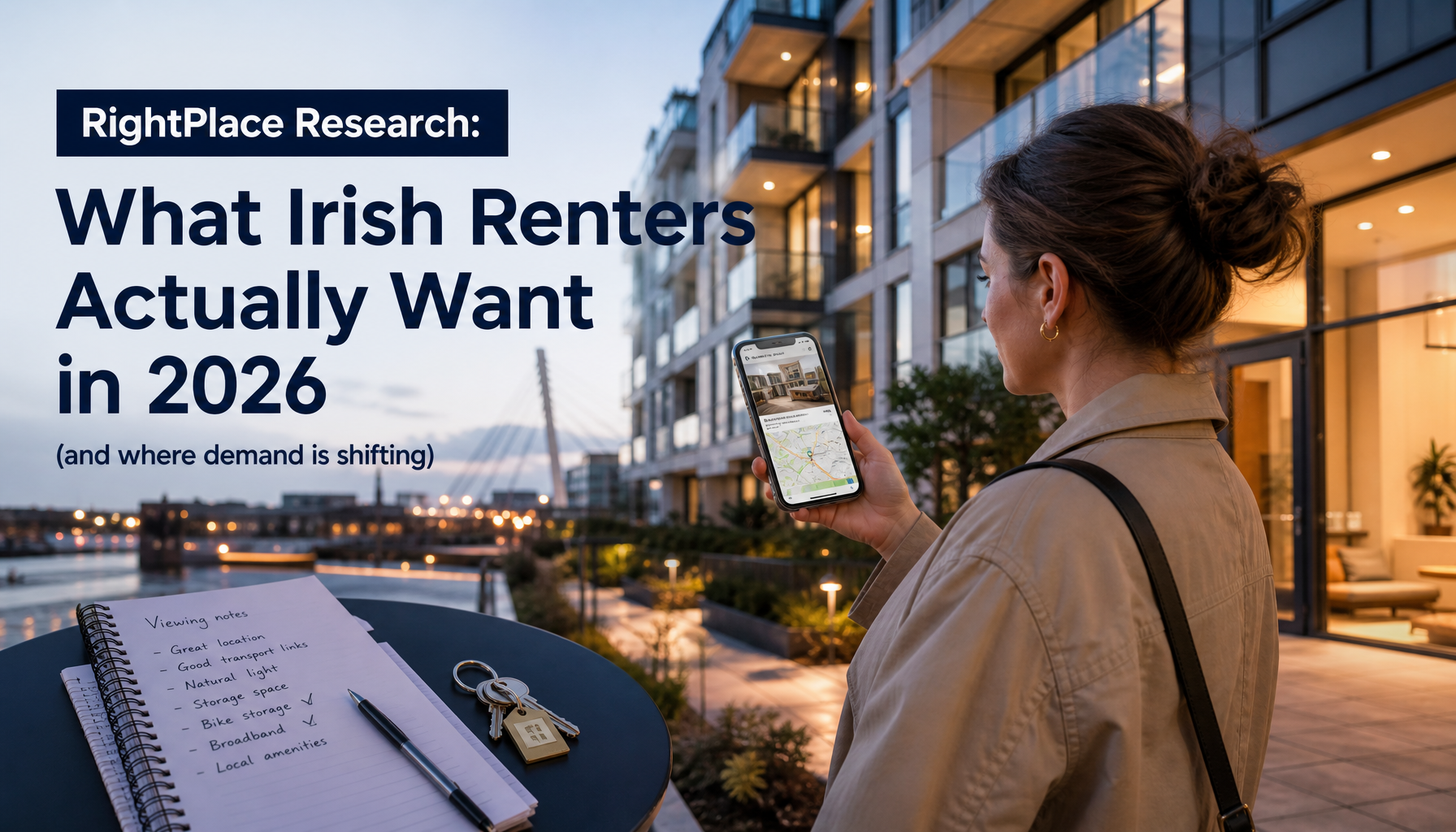
What Irish renters want in 2026 is not one single thing. It is a mix of practical requirements, comfort expectations, and day-to-day convenience. Across the rental market, those priorities show up in how people search, what they shortlist, and what landlords are listing. This article is a data-led look at Irish rental market demand 2026 through the lens of renter preferences and rental listings trends, focusing on what is driving attention and where momentum is shifting.
Before we get into the patterns, a quick note on method. This is a RightPlace-style market view based on what prospective renters typically look for when browsing listings and planning viewings. We also use reputable external context for the bigger picture of Ireland’s housing landscape. For readers who want to continue exploring inventory, you can browse rental listings directly at /property-to-rent, and if you are also considering future options, you may want to compare with /property-for-sale.
1) The clearest renter preferences in 2026
When renters talk about what they want, they often start with location. But in 2026, the strongest demand typically forms around a bundle of features, not just a postcode. Based on recurring browsing and shortlisting behaviour, the priorities that consistently matter include:
- Reliable commuting access, especially for people who work in offices, hybrid settings, or who need predictable travel times.
- Homes that feel move-in ready, where the layout and condition reduce uncertainty.
- Better everyday quality of life, such as storage, usable room sizes, natural light, and practical outdoor space where available.
- Good value for money, where renters interpret value as a combination of rent, condition, and how well the home fits their routines.
That might sound broad, but it translates into very specific listing behaviour. For example, if two homes are similar on rent, renters are more likely to focus attention on the one with a clearer description, better photos, and details that help them visualise daily life.
2) Rental listings trends, what gets noticed first
In 2026, the rental listings trends that drive attention tend to be the ones that reduce friction for the viewer. A listing does not need to be flashy, but it should answer the questions that typically come up before a viewing. In practice, the listings that attract higher interest usually include:
- Clear photos and layout information, including how rooms connect and what the home actually looks like.
- Useful specifics, such as heating type, approximate size or room configuration, and any notable upgrades.
- Tenancy-fit details, like whether the home suits shared living or family use, rather than only describing it as “ideal”.
- Low ambiguity, meaning the description is straightforward and avoids vague claims.
Renters in 2026 are also more likely to compare listings side-by-side and filter quickly. This is one reason why good presentation can matter as much as the property itself. If you are exploring options, using RightPlace search tools and saving shortlist favourites can help you manage a busy viewing calendar.
3) Where demand is shifting, commuter belts versus city centre
A major theme in 2026 is shifting demand between city-centre areas and commuter belts. While city-centre convenience remains attractive, many renters are weighing up travel, energy costs, and overall lifestyle value. That trade-off is particularly relevant for renters who prioritise reliable daily travel rather than being “in the middle of everything”.
RightPlace has previously covered this dynamic in a broader way in our data-led commuter belt versus city-centre discussion, and it is still a useful framework for 2026. You can read it here: /news/data-led-commuter-belts-vs-city-centre-demand-in-2026-what-it-means-for-renters-and-buyers.
In practical terms, the demand shift often looks like this:
- City centre listings can attract strong interest when they offer functional layouts and quick access to transport and services.
- Commuter belt locations can gather momentum when renters feel they are getting more space, better condition, or a more “settled” home life without excessive travel hassle.
For renters, this means you should compare not just rent, but also the total time cost of commuting, the quality of the property experience once you are home, and how easy it is to access daily needs.
4) The growing pull of “fit for purpose” homes
In 2026, the phrase “fit for purpose” is increasingly how renters evaluate a listing. A home should match the way people live now, including hybrid work, remote study, and the need to balance living spaces. This is where renter preferences become more nuanced:
- Space that works, even when the home is not large, because layouts and room utility matter.
- Outdoor access or nearby green space where feasible, especially for tenants who want a calmer routine.
- Storage and practicality, such as places to store bikes, bags, tools, or seasonal items.
- Low effort living, meaning the property should not demand major work before you can settle in.
If you are viewing, try to ask questions that test day-to-day convenience. For example, consider where you would place a work setup, how you would manage deliveries, and whether the home’s circulation suits your routines.
5) Shared living and house shares, shifting expectations
Not every renter is looking for a traditional single-tenant let. In 2026, shared living remains a meaningful part of rental market demand, particularly for students, early-career professionals, and people temporarily relocating for work.
What has changed is that renters expect more clarity. Shared homes are shortlisted when they have:
- Room privacy and a sense of personal space.
- Clear household rules, including how bills and shared areas are managed.
- Practical shared facilities, such as bathroom access, kitchen usability, and workable storage.
If you are considering a house share, it can help to browse with the intention of finding a home with “everyday fit”. You can also explore room and sharing options on RightPlace at /sharing.
6) New builds, energy expectations, and the “future proofing” effect
Energy performance and comfort expectations remain a strong theme in rental decisions. Even when renters do not treat energy efficiency as a headline factor, it still influences how a home feels day-to-day. In 2026, renters tend to gravitate towards homes that promise:
- Consistent comfort, such as good insulation and dependable heating.
- Modern amenities, where layouts, windows, and finish quality reduce maintenance stress.
- Less unpredictability around how the home will perform across seasons.
For readers also considering ownership pathways later, it can be useful to compare the rental experience with the direction of the new-build market. You can browse new homes at /new-homes.
7) What this means for renters planning a move in 2026
Rental market demand can change quickly. To navigate 2026 with confidence, renters often benefit from a structured approach to searching and viewing. A practical checklist can include:
- Define your “must haves” before you view, not during the viewing.
- Check transport reality, including what your commute looks like at the time you actually travel.
- Compare like with like, for example similar layouts and similar condition levels rather than mixing very different options.
- Use viewing time well, focusing on questions that impact living comfort rather than only aesthetics.
If you are balancing renting with planning to buy in the near future, you may also find it helpful to read RightPlace guidance on house hunting. While it focuses on buyers, the viewing mindset is transferable. See /news/house-hunting-2026-30-point-viewing-checklist-irish-buyers.
8) Wider context, why renters are feeling the squeeze
The rental experience in Ireland does not happen in isolation. Structural pressures such as population growth, the pace of housing supply, and affordability constraints all shape what is available and how quickly homes are let. For high-level context on Ireland’s housing situation and policy direction, readers often look to official and academic sources such as:
- Central Statistics Office (CSO) for broad housing and demographic indicators.
- gov.ie Housing for government programmes and updates.
- Environment, Climate and Communications and related energy information sources where relevant for energy and building context.
When these pressures increase demand for accessible, well-presented homes, renter preferences become even more decisive. In other words, the rental market can feel tight, and the listings that align closely with what renters want tend to move first.
9) Practical next steps, how to use rental listings trends
If you are searching actively, you do not need to predict the market. You do need to respond to it. Here is a simple way to apply the findings from this RightPlace research:
- Shortlist based on daily living fit, not only location.
- Track listings trends, noting which areas consistently show suitable inventory.
- Consider alternative formats, such as house shares, if they better match your budget and lifestyle.
- Plan viewings efficiently so you can act when you find a home that truly matches your needs.
Finally, remember that every transaction is specific. If you are unsure about lease terms or anything about a property’s status, speak with the relevant professional or agent. It is always better to clarify details early than to assume.
The headline for 2026 is straightforward: Irish rental market demand 2026 is being steered by practical renter preferences, and rental listings that clearly communicate fit, condition, and lifestyle convenience are getting the most attention. If you want to see what is available right now, start with /property-to-rent, then refine your search based on your own must haves and viewing priorities.