House Hunting in 2026: The 30-Point Viewing Checklist for Irish Buyers
Buying · By David S · 22 August 2026
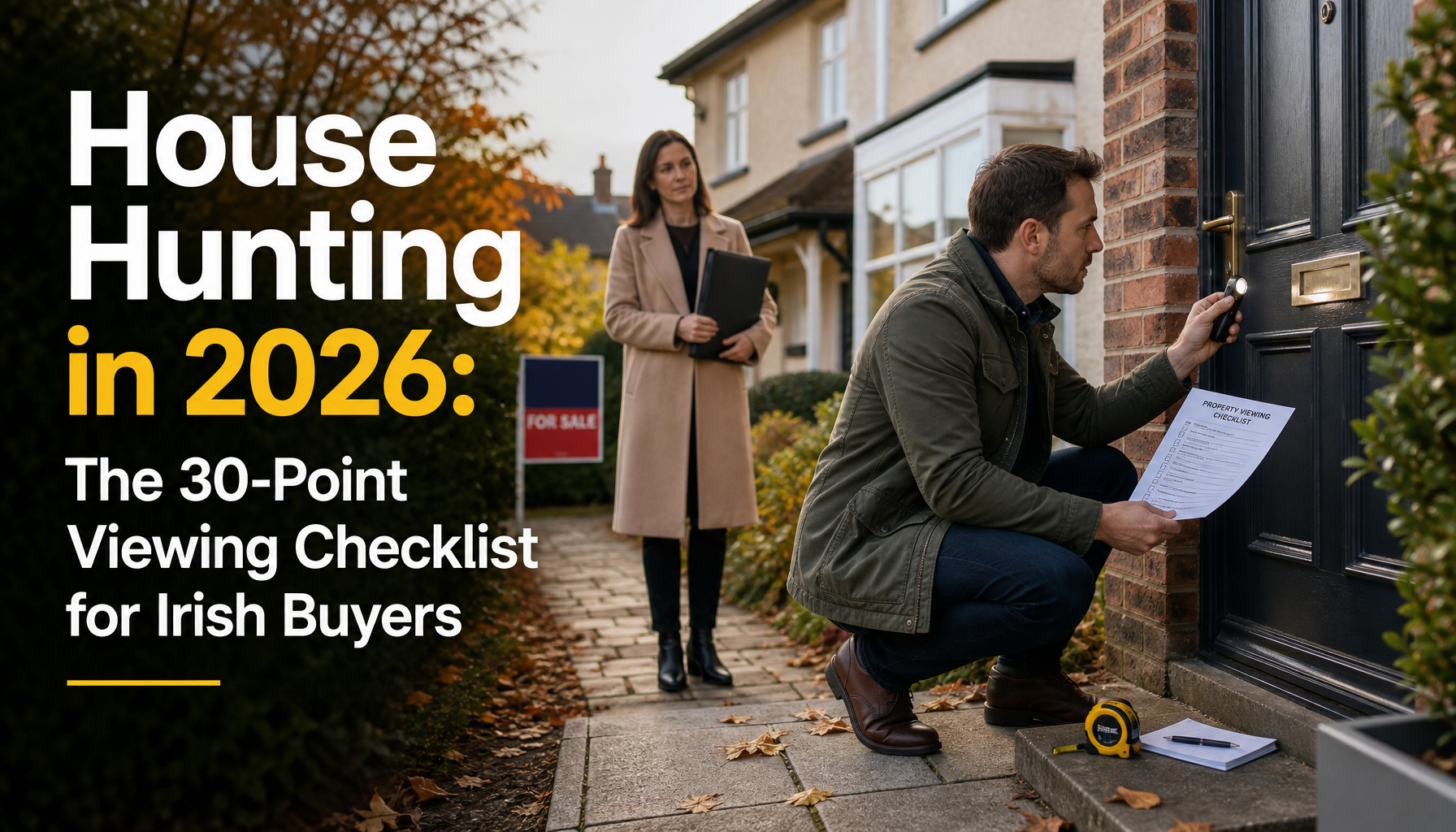
Buying a home is both exciting and stressful, especially in 2026 when buyer expectations are higher and listings move quickly. A strong property viewing checklist Ireland 2026 helps you stay focused. It also makes it easier to compare homes fairly, without relying on first impressions like layout “feel” or decorative styling.
This guide sets out a practical, 30-point approach you can use whether you are viewing an apartment, a terrace, a semi-detached home, or a detached property. It also covers what to ask during a viewing, so you can separate marketing claims from verifiable details. While this checklist is comprehensive, it does not replace professional surveys or legal checks. When in doubt, ask for documentation and seek advice from qualified experts.
Before you book, do quick prep that improves the viewing
You cannot inspect everything before you arrive, but you can avoid wasting time. Preparation helps you walk into the viewing with a clear plan, and it reduces the chance you will forget key questions.
- 1) Confirm the basics: address, asking price, and what is included (fixtures, appliances, furniture if any).
- 2) Check the listing details: tenure type, property type, and any stated renovations or extensions.
- 3) Identify your “must-haves”: parking, garden size, number of bathrooms, commute needs, and accessibility.
- 4) Plan your route and arrival time: view at the time of day you would realistically live there, if possible.
- 5) Bring the right kit: torch or phone light, measuring tape, notepad, charger, and a phone camera.
- 6) Have a comparison method: a simple scoring sheet for each room and each risk area.
The 30-point house viewing checklist Ireland 2026, room by room
Use the list below during the viewing. If something looks questionable, do not be pressured into moving on. Ask follow-up questions, request documentation, or schedule a second visit if needed.
Entry, layout, and general condition
- 7) Condition of the entrance and hall: cracks, damp marks, paint bubbling, and door alignment.
- 8) Floor and ceiling surfaces: check for uneven boards, sagging ceilings, and staining.
- 9) Smell test: a musty odour can indicate damp or poor ventilation, even if there are no visible marks.
- 10) Light and airflow: open windows, note ventilation, and observe how the property holds heat or feels cold.
- 11) Room proportions and practical flow: consider furniture layout, circulation space, and whether rooms “work” in real life.
- 12) Storage reality: count built-in storage and check if cupboards are usable or just decorative.
Kitchen, bathrooms, and plumbing red flags
- 13) Kitchen surfaces: look for water staining near sinks, around taps, and at cabinet joins.
- 14) Ventilation in cooking areas: check extractor fans and how effectively they vent outside.
- 15) Water pressure and hot water response: ask the agent if hot water is instantaneous or if there are delays (avoid overreliance on demonstration alone).
- 16) Bathrooms, shower trays, and seals: inspect grout, silicone edges, and any signs of recurring moisture.
- 17) Tiling and pipework around wet areas: check for lifting tiles, cracks, and staining.
- 18) Toilets and water systems: note any evidence of past leaks, slow drains, or persistent odours.
Heating, insulation, and energy-related details
- 19) Heating system type: identify the system (for example, central heating, heat pump) and ask for maintenance history if available.
- 20) Radiator or vent performance: check if radiators heat evenly or if certain areas stay cold.
- 21) Thermostat and controls: confirm where controls sit and whether zoning is practical for your household.
- 22) Loft insulation and access: if there is safe access, ask about insulation levels and any recent improvements.
- 23) Double glazing status and seals: check window edges for drafts, condensation, and damaged frames.
- 24) Drafts and gaps: feel around doors and windows, and look for poorly sealed openings.
Walls, windows, damp indicators, and structural cues
- 25) Signs of damp: look for tide marks, flaking paint, discoloured skirting boards, and efflorescence.
- 26) Cracks, and where they are: note crack location and width, then ask whether any repairs have been done.
- 27) Ventilation strategy: check extractor fans in wet rooms and any trickle vents if present.
- 28) Chimney or vents: if applicable, check for open voids, blocked flues, or missing covers.
Outside, garden, and boundaries
- 29) Roofline and gutters (visual only): check for sagging, blocked gutters, or missing sections.
- 30) Garden drainage and boundaries: observe where water gathers after rainfall, inspect fences and gates, and ask who is responsible for maintenance.
What to ask during a viewing, the 12 key questions
Even with careful inspection, the questions you ask will influence how well you can assess risk and future cost. Below are questions designed to be easy to ask and useful to you when comparing properties.
- 1) Why is the property being sold or rented? (If buying, it is still helpful to understand motivation.)
- 2) What renovations or repairs were completed, and when? Ask for dates, receipts, and any warranties if available.
- 3) Have there been any water ingress issues such as leaks, damp complaints, or overflow problems? If yes, what was done to fix them?
- 4) What maintenance has been carried out recently? Examples include boiler servicing, roof checks, gutter cleaning, or sealing upgrades.
- 5) For heating systems, is there a servicing log? A straightforward answer and documentation are a strong sign of responsible ownership.
- 6) What is the management arrangement for the property? For apartments or estates, ask about common areas and who pays for upkeep.
- 7) What are the energy bills like? You can ask for an estimate, but treat it as a guide and compare across similar homes.
- 8) How is the waste and recycling handled? Especially relevant for apartments, gated estates, and certain developments.
- 9) Are there any planned works for the building or estate in 2026 or beyond?
- 10) What is included in the sale? Confirm fixtures and fittings to avoid misunderstandings later.
- 11) Are there any boundaries or access issues you should know about, including shared paths or rights of way?
- 12) What does the agent suggest you verify? A good agent can point you to documentation they have on file, but you should still do your own due diligence.
How to use your notes to compare homes fairly
After each viewing, spend 10 to 15 minutes writing a short summary. The biggest mistake buyers make is relying on memory, especially when multiple viewings happen close together. A simple structure works well.
- Create a “risk list”: damp, cracks, poor ventilation, old services, roof concerns, or any explanation that does not sound consistent.
- Mark “must investigate” items: anything that could require specialist attention or follow-up evidence.
- Record positives with specifics: for example, clear storage, bright rooms, practical parking, or evidence of regular maintenance.
- Compare layout and lifestyle fit: don’t just compare room count, assess how you will live with it day to day.
When to request a second viewing or extra information
It is normal to feel tempted to move quickly, particularly when a well-presented home gets interest. However, you should consider a second look or additional information if any of the following show up:
- Visible damp indicators, repeated moisture signs, or unresolved odours.
- Cracks that you cannot confidently assess, especially if they widen or are near wet areas.
- Unclear heating or insulation details.
- Confusing boundaries, access routes, or maintenance responsibility.
- Any mismatch between the listing description and what you see in person.
Professional checks, what they can and cannot do
A viewing checklist is a screening tool, not a final assessment. If you are considering a purchase, you should expect to engage relevant professionals for legal and technical due diligence. For context on housing supports and general housing information, you can also review Citizens Information housing guidance as a starting point, particularly if you are first-time buying or comparing routes to home ownership.
For buyers who want to understand broader market expectations in 2026, it can also help to read practical guides on agent roles and how offers are typically handled. See The Role of Estate Agents in Today’s Market, What to Expect in 2026, and if you are comparing properties across listings, the guide on Estate agent fees in Ireland in 2026: what’s included, what to negotiate, and how to compare offers may be useful for planning conversations with agents.
Where to start your search, and how to keep momentum
Once you have your checklist ready, the next step is simply finding homes that match your must-haves. Use RightPlace to browse options quickly and organise your short-list.
- Explore current listings on /property-for-sale to find homes across different price points.
- If you prefer to compare purchase and flexible options first, check /property-to-rent.
- If you are considering a more straightforward path with brand-new builds, see /new-homes.
Bottom line for 2026 buyers
A great viewing is not about being impressed, it is about being informed. Use this property viewing checklist Ireland 2026 to structure your time, capture evidence, and ask meaningful questions. If you do that consistently across every visit, you will compare homes more confidently and reduce the risk of overlooking issues that only show up when you look carefully.
When you are ready to view, print the checklist, or save it to your phone. Then walk in with a plan, and walk out with clear notes. That is how you turn viewings into decisions.