Buying a home in Ireland in 2026, what to ask about BER before you commit
Buying · By David S · 27 September 2026
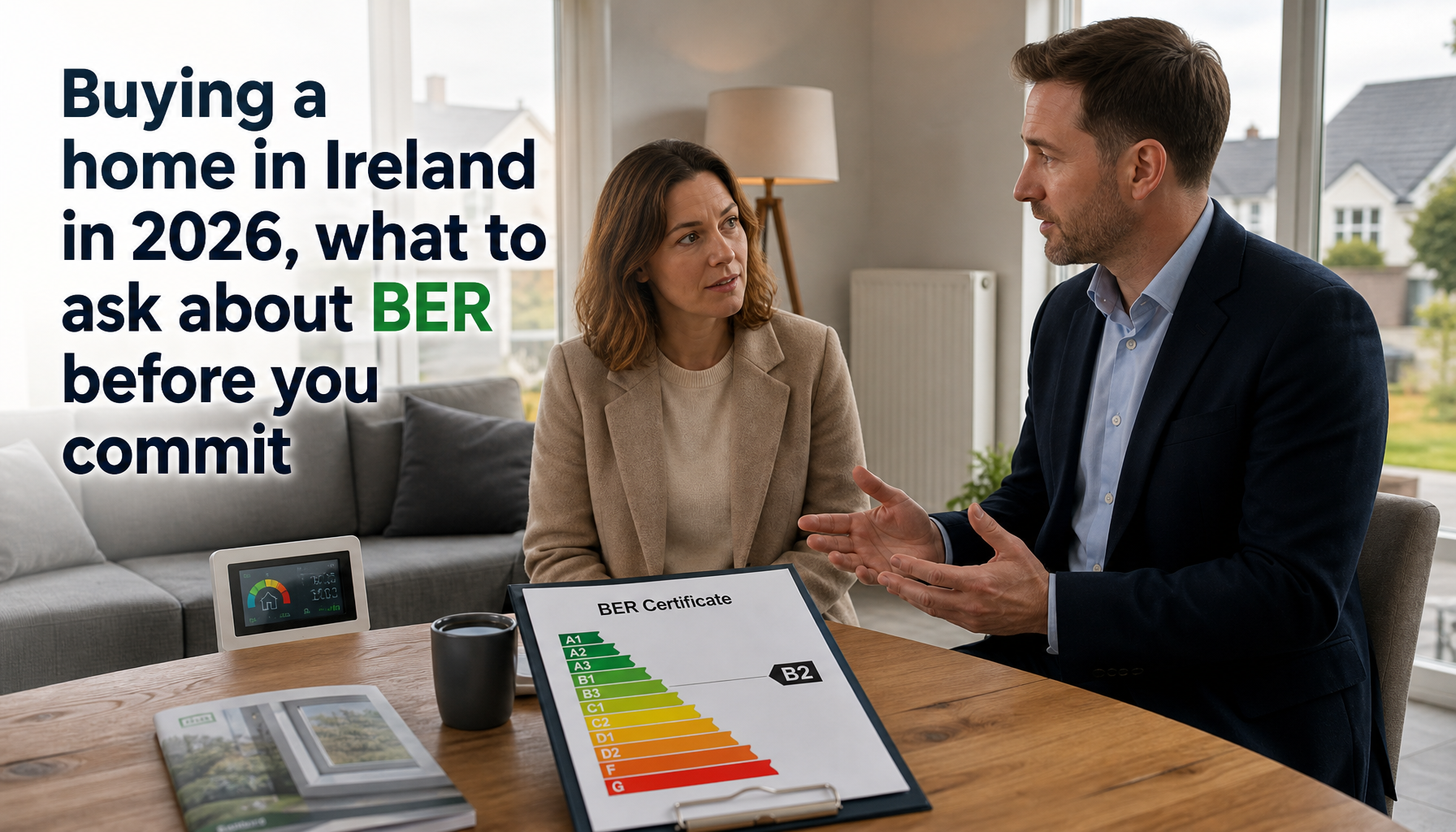
BER, or Building Energy Rating, has become one of the first pieces of information most buyers look for. But in 2026, having an energy rating on paper is only the starting point. If you are considering a property and you want to avoid surprises later, the most useful approach is to ask focused BER questions before buying, and then link what you hear to what the home is actually like on view.
This guide sets out a practical checklist of what to ask about BER, what documents to request, and how to think about potential renovation costs and home running costs without guessing. While BER is a useful indicator of energy performance, it is not a guarantee of how much you will spend each month, so it is wise to combine BER details with reasonable inspection and, where needed, professional advice.
Start with the basics, confirm what the BER report says
When a seller provides the BER cert, do not stop at the headline letter. Ask for the full BER documentation and make sure you understand what it refers to. These are the first of the BER questions before buying that tend to clarify everything else:
- What is the BER rating and what is the BER reference report? Ask for the full BER certificate details, including the calculation date shown.
- Is the home’s BER based on an internal inspection, or only on available information? The method can affect how accurate the estimate is.
- What is the heating system listed on the BER? Boilers, heat pumps, radiators, and controls can change the running costs significantly.
- What improvements were assumed in the BER? If the report lists insulation, windows, or ventilation upgrades, ask for evidence.
If the home has had updates since the BER was issued, ask whether a new assessment has been carried out. In many cases, energy performance can shift after works such as window replacement or attic insulation. The key point is that you want your expectations to align with the current state of the property.
Ask about heating and controls, where running costs are often decided
In Ireland, the heating system and how it is controlled can make a big difference to home running costs. A property may have an attractive energy rating yet still be expensive if it is operated inefficiently or if the equipment is older than it appears.
Use these BER questions before buying to get beyond the rating and into the practical reality:
- What is the heating source and how old is it? Boiler age, service history, and any recent repairs matter.
- Are controls modern and optimised? Ask about thermostats, zoning, programmers, and any smart controls used.
- What fuel type is actually used? Make sure the BER reflects the reality of the home’s operation.
- How is hot water produced? The BER will typically reference the hot water method, but it helps to confirm it matches how the household uses the home.
- Is the heating system balanced and working as intended? Ask about maintenance and whether rooms heat evenly.
On view, pay attention to comfort as much as paperwork. Cold spots, struggling radiators, or inconsistent hot water can be clues that the installed system and the calculated model may not match perfectly.
Windows, doors, and insulation details can drive renovation costs
When buyers talk about renovation costs, they often focus on large items. BER can help you identify what those large items might be, but only if you ask the right questions about the assumptions.
Ask:
- What is the BER reporting for wall, attic, and floor insulation? If the BER assumes certain insulation levels, request documentation or proof of works.
- What type of glazing is listed? Single, double, triple glazing, and the general window condition affect performance.
- What are the doors and draft sealing like? External door quality and gaps can impact heat loss.
- Is ventilation addressed in the BER model? Ask what ventilation type is assumed and whether trickle vents or other measures exist.
If insulation is incomplete, the home may still be liveable, but you should ask yourself whether the current condition aligns with your budget for improvements. It is reasonable to ask for a copy of any contractor invoices or completion certificates for insulation, window replacement, or other envelope works, where available.
Look for ventilation, airtightness, and moisture risk, not just energy performance
BER focuses on energy, but a practical buyer should also connect energy improvements to comfort and maintenance. In properties where insulation or windows have been upgraded, buyers should consider whether ventilation is adequate and whether there are signs of moisture-related issues.
These BER questions before buying can bring ventilation into the conversation:
- Is there mechanical ventilation or an appropriate passive system? Ask what exists now and what the BER assumes.
- Have there been any condensation or mould issues? If the seller has observed or resolved issues, ask what was done.
- How have vents and extraction been maintained? Kitchen and bathroom extraction is part of the full picture.
- Were any upgrades carried out recently, and when? Timing matters for the current performance and any settling-in period after works.
This is where a good visual inspection can complement BER. If you see damp patches, peeling paint, or persistent condensation, ask direct questions and consider getting a professional assessment before you commit.
Understand what upgrades have been done, and whether evidence exists
A BER certificate tells you what is expected, not always what has been verified. It is worth asking about any improvements that were carried out and whether they are documented. The goal is not to distrust the cert, but to understand how reliable it may be.
Ask:
- Which upgrades were done after the last BER was prepared?
- Can you provide dates and contractor details for insulation, windows, heating, or ventilation upgrades?
- Were works completed to a consistent standard across the property?
If the seller cannot provide evidence, it may still be fine, but it changes your risk profile. In that case, you may want to budget more for potential corrections, or seek an updated assessment after purchase with professional support.
Connect BER to likely bills, but avoid treating the rating as a promise
Many buyers want to translate the BER letter into expected costs quickly. While it is tempting to use the energy rating as a direct forecast, remember that actual bills depend on behaviour, occupancy, thermostat settings, and how the system is operated. Two households can live in the same home and see very different outcomes.
Still, you can make BER information practical by asking about:
- Typical fuel bills for the last year (if the seller can share). Ask for a range, not just one bill.
- Average occupancy and heating patterns during winter months.
- Any known inefficiencies, such as zones that do not heat well or hot water recovery time.
If you are comparing two homes, BER can be one input, but the best comparisons also look at the condition of the heating system and how well the property has been maintained.
Plan for renovation scenarios, start with the biggest levers
If you are considering a home with a lower energy rating, you might be attracted by price and location, with the intention to upgrade over time. The smart way to approach this is to treat renovation as a plan with stages, rather than a single “fix everything” budget.
To structure your thinking, ask for a conversation that links BER to likely work:
- Based on the BER, what improvements would have the biggest impact? Use the certificate details to guide the discussion.
- What is already in place, and what is missing? This helps you separate “must do” from “nice to do”.
- Are there constraints? For example, limited attic access, historic windows, or layout that affects ventilation upgrades.
Where you feel unsure, it is sensible to speak with a qualified professional or relevant installer for an indicative view of renovation costs. You do not need a full design, but you do need a reality check before you decide the home is affordable to improve.
What documents to request, and where to verify information
A smooth purchase depends on paperwork. At minimum, ask to see the BER certificate and ensure the details match what you observe. If the seller references works that would logically change the energy rating, request supporting information.
For broader housing context, including general buyer and housing information, you can refer to Citizens Information for up-to-date guidance at https://www.citizensinformation.ie/en/housing/.
Also consider using RightPlace research and checklists to manage your wider buying process. For example, if you are planning ahead in 2026, you may find helpful support in our guides such as Irish first-time buyers in 2026: how to prepare your deposit plan (before you apply) and our tips on new builds in New Build Reality Check in 2026: What to Negotiate in the Final Weeks (Not Just at Snagging).
A quick BER questions before buying checklist you can take to viewings
Bring this short list to your next viewing. It is designed to prompt clear answers and help you compare homes fairly.
- Can I see the full BER certificate, including the assessment date and details?
- What heating system is listed, and what is the age and maintenance history?
- What insulation is assumed or verified, including attic and wall levels?
- What glazing and door types are included in the BER?
- How is ventilation handled now, and what does the BER assume?
- Have there been improvements since the BER was issued? If yes, what are the dates and evidence?
- Can the seller share typical home running costs for winter months?
- If upgrades are needed, what are the biggest levers suggested by the BER details?
Finally, remember that BER is a tool for decision-making, not a substitute for inspection. If the home has signs of damp, poor heating, or mismatches between what you see and what the cert suggests, treat it as a prompt to slow down and get specialist input before committing.
If you are ready to browse homes in 2026, explore current listings on /property-for-sale, or compare your options across different property types and energy profiles. For those considering alternatives while planning a move, you can also review /property-to-rent and /new-homes for homes that may have more recent energy documentation.