Renting in Ireland in 2026: how to compare tenancies before you sign
Renting · By David S · 23 July 2026
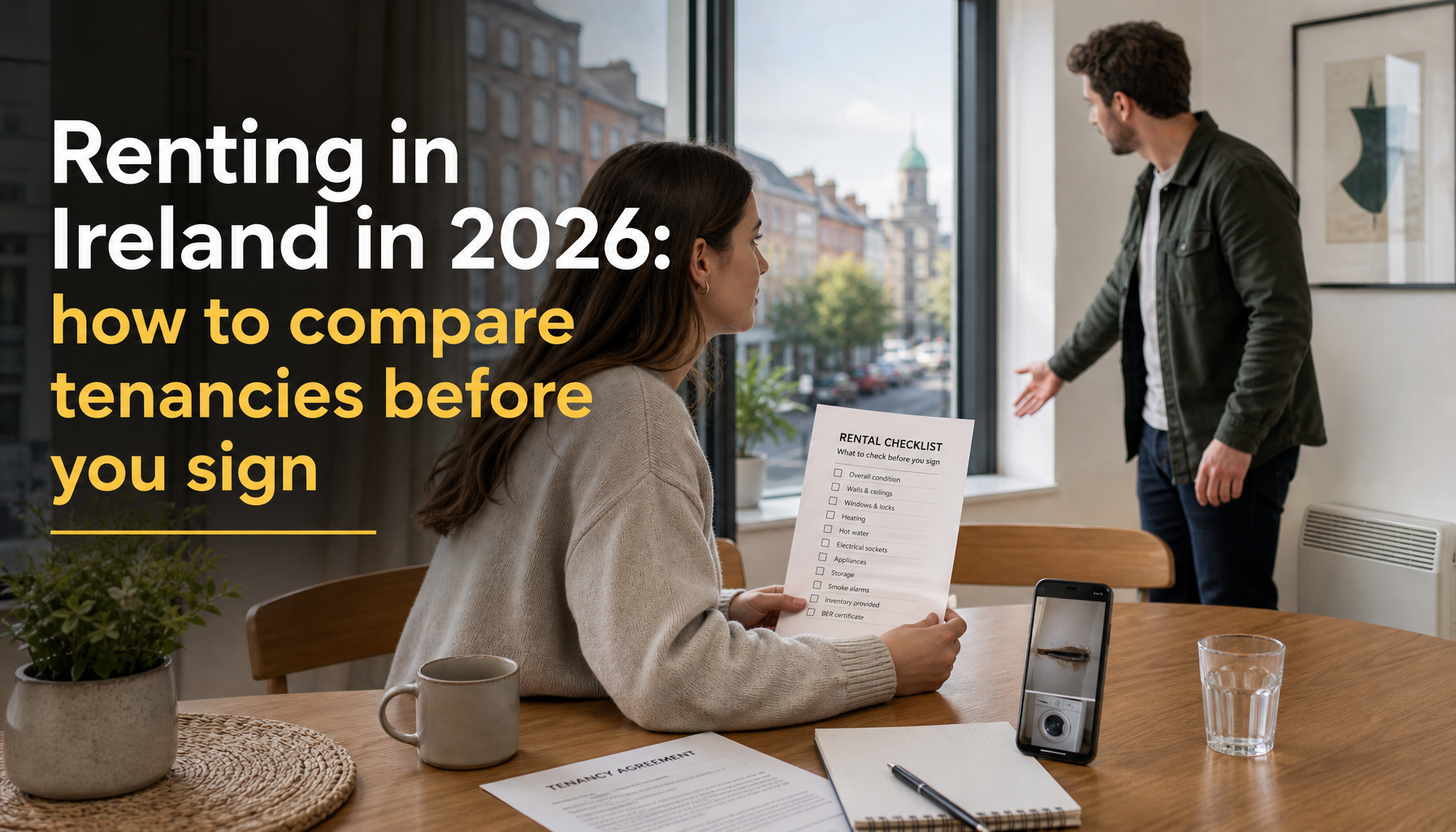
For many people, renting in Ireland 2026 is a practical step, whether you are relocating for work, returning to the rental market after a move, or looking for flexibility before buying. The challenge is that two homes advertised at the same rent can feel very different once you compare the day-to-day realities: how the tenancy is structured, what is included, how repairs and maintenance are handled, and what happens if something breaks.
This guide focuses on how to compare tenancies before you sign. It is designed to help you ask clearer questions, spot mismatches early, and create your own rental checklist so you can move forward with confidence. While local practices can vary, the principles below will help you assess most standard residential rentals.
Start with the basics that affect total monthly cost
The headline rent is only part of the picture. Before you book a second viewing, list the items that determine how expensive the tenancy will be each month and each season.
- Rent and any additional charges: confirm the exact rent figure and what is extra. Some tenancies include e.g., bin service or management charges, while others do not.
- Bills and utilities: ask who pays electricity, gas, oil, refuse, and internet. If a landlord indicates average bills, request anything you can rely on, such as past statements or a clear explanation of the heating system.
- Deposit amount and what it covers: confirm the deposit figure in writing, and ask how it will be treated at the end of the tenancy. Do not assume it will be automatically returned in full.
- Parking and shared areas: if parking is included, confirm where you can park and whether permits are required. For apartments or homes with communal areas, ask what rules apply and who manages them.
- Furnishings: note what stays with the property. A furnished unit can still leave you responsible for key items, depending on what the landlord includes.
When you compare two tenancies, create a simple side-by-side table on paper or your phone. Even a basic table makes it easier to see the difference between “cheap rent” and “higher total cost”.
Read the tenancy agreement Ireland with the questions you actually need answered
A solid viewing is useful, but the tenancy agreement Ireland is where the rules live. If a landlord or agent is reluctant to clarify the paperwork, treat that as a signal and ask for time to review it.
Use these prompts to guide your review:
- Lease term and renewal: check the start date, how long the term runs, and what happens at renewal. If the property is advertised as a specific duration, ensure it matches the written agreement.
- Break clause or early termination: ask whether you can leave early and what notice period applies. Confirm any associated costs, so there are no surprises.
- Who is responsible for what: look for sections covering tenant and landlord responsibilities. This connects directly to your expectations around repairs and maintenance.
- Rules on rent reviews: if rent can change during the tenancy, understand how it is calculated and when it can occur.
- Subletting and guests: confirm whether you can have a lodger, sublet, or allow extended stays, particularly if your situation might change.
- Inventory and condition reporting: the agreement may refer to an inventory schedule. Ask how it is completed, signed, and stored.
For practical guidance on housing rights and general housing information, you can also review resources from the public information service at Citizens Information.
Do a condition check, then match it to the inventory
During viewings, focus on evidence, not impressions. Take photos and notes as you go, and ensure the inventory reflects what is present and what the property looks like at the start.
Your condition check should include:
- Walls, floors, and ceilings: check for cracks, damp staining, scuffed flooring, and water marks.
- Windows and doors: confirm they open and close properly. Look for gaps that suggest poor sealing or drafts.
- Heating and hot water: ask how the heating works and test it during the viewing if possible.
- Plumbing and drainage: run taps, check under-sink areas for leaks, and ask how often the landlord addresses drainage issues.
- Appliances: confirm the oven, hob, fridge, and washing machine, if included, are functioning and how repairs are handled if they fail.
- Electrics: check sockets, lighting, and whether any safety concerns are already known.
Then compare your notes against the inventory in the agreement package. If the inventory does not match what you saw, ask for corrections before you sign.
Repairs and maintenance, how to evaluate the landlord’s track record
Issues will happen in any rental, but the difference is how quickly and fairly problems are addressed. This is where you should go beyond the wording and understand the practical response process.
Ask clear questions such as:
- How do you report issues: email, phone, a portal, or a specific contact person. Get the right contact details in writing.
- What counts as urgent: for example, blocked drains, no heating, or significant leaks. Ask what the response timeline typically looks like.
- Who pays for repairs: confirm the approach for tenant-caused issues versus landlord responsibilities.
- Availability for access: if repairs require entry, how much notice is given and what times are acceptable.
- Past examples: if you can, ask for anonymised examples of recent maintenance, and what was done to resolve them.
When you are comparing two properties, do not just ask, “Will it be fixed?” Ask, “How will it be fixed, and what is the process from day one?” A landlord who can explain their approach plainly is usually easier to deal with later.
Compare inclusion details that affect everyday living
Some tenancies feel smooth because the basics are covered. Others can become frustrating because common items are not included or rules are inconvenient. As part of your rental checklist, compare the following points across each option:
- Internet and TV: is it available, and if so, who pays? Is there existing wiring?
- Bins and waste: confirm what service applies and what rules you must follow.
- Furniture quality and condition: a “furnished” listing may include essentials only, or it may include more. Check the condition and whether anything is missing.
- Storage: wardrobes, cupboards, and whether there are locks if you need them.
- Noise and neighbours: listen at different times if possible and consider whether thin walls or external traffic may be an issue.
- Accessibility: if steps, parking distance, or lifts matter for you, factor this into your comparison.
If you are open to different property types, it can also help to look at alternatives such as Browse rentals on RightPlace or House shares to see how different arrangements compare on cost and lifestyle.
Beware of red flags that should stop the process
Not every problem is a deal-breaker, but you should pause and ask more questions if you notice inconsistencies. Common warning signs include:
- Unclear or missing documentation: if you cannot get the tenancy agreement details, or if key terms are not explained.
- Mismatch between advertised information and the property: for example, a listing says furnished but items are missing or not working.
- Refusal to provide access for inspections: especially if you need to verify condition or complete an inventory.
- Vague answers about repairs: if the landlord or agent cannot explain the process for repairs and maintenance.
- Condition concerns ignored: visible damp, recurring leaks, or significant damage that is dismissed without any plan.
If anything feels unclear, do not sign “to get it over with”. Asking for clarification is part of responsible renting in Ireland 2026.
Make your final decision with a structured comparison
After your viewings, you want a repeatable way to choose. Here is a straightforward approach:
- Score each tenancy on key criteria: cost, property condition, heating and hot water, clarity of agreement, and repairs process.
- Check for alignment: your inventory notes should match what is in the paperwork. Any difference should be resolved before signing.
- Consider your “worst week”: if something breaks, how would you cope? Would you have clear reporting channels? Would access for repairs be straightforward?
- Plan for your timeline: if you might need flexibility, examine the early termination terms and notice periods carefully.
It can also be useful to review broader housing context while you decide. If you are considering buying alongside renting, you can explore current guidance on RightPlace, such as Is Now a Good Time to Buy a House in Ireland? 2026 Buyer Guide or Properties for sale in Ireland. Even if you are staying put for now, seeing the big picture can help you choose a tenancy length that fits your plans.
Last steps before you sign
Before signing anything, take five minutes to confirm:
- You have the full tenancy agreement package and understand the main terms.
- The rent, deposit, and included items are clearly stated.
- The inventory reflects the condition and contents accurately.
- You have the repair reporting process and contact details for repairs and maintenance.
- You have taken photos and notes that can support condition discussions later.
Renting in Ireland 2026 should not be a gamble. When you compare tenancies in a structured way, you reduce risk and increase the chance that your home experience matches what you expected at the viewing.