Landlord guide for 2026: setting rent, planning maintenance, and protecting yield
Landlords · By David S · 10 August 2026
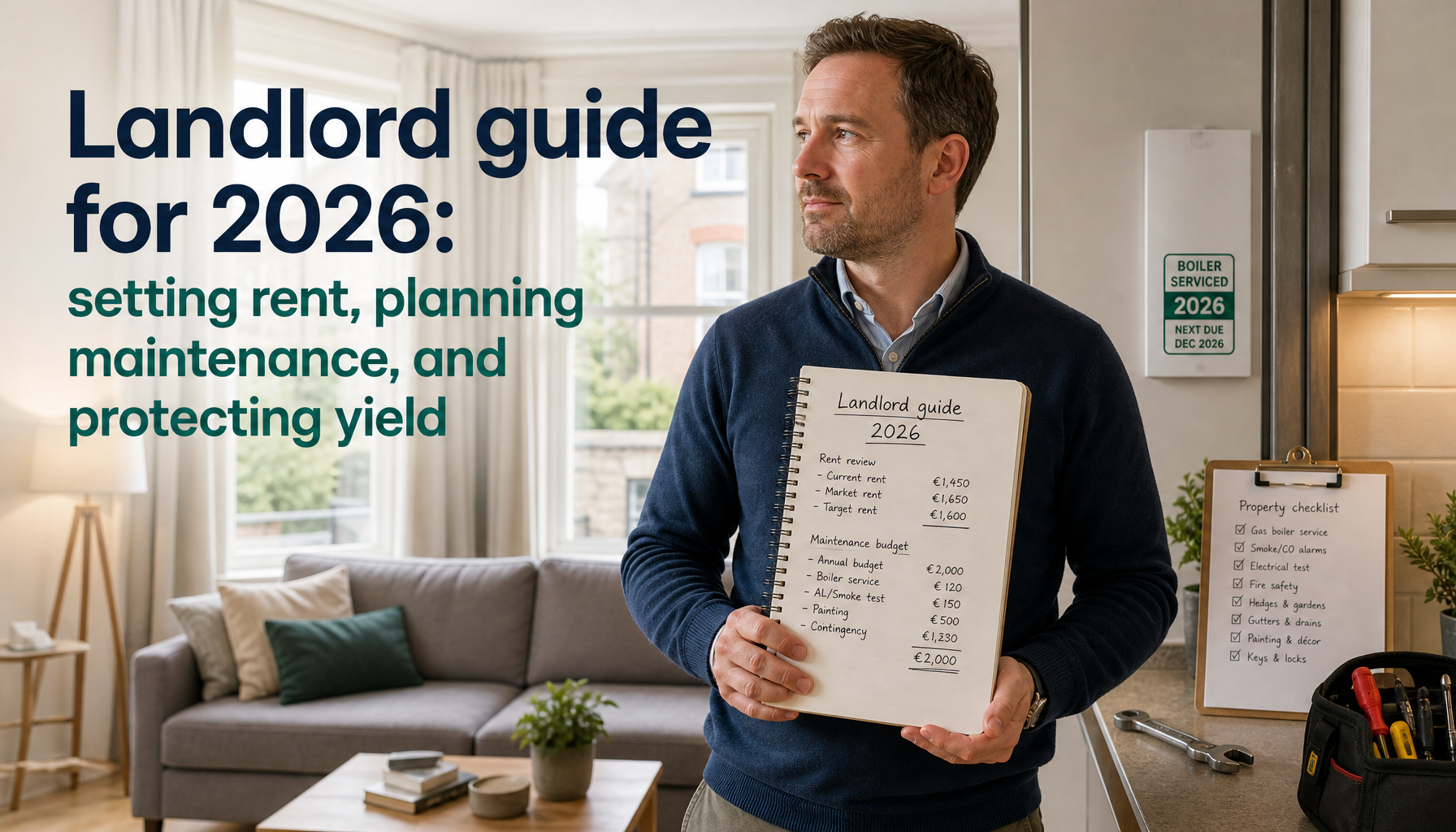
Running a rental property in 2026 is less about one big decision and more about steady, informed choices. The landlords who see the strongest rental yield are often the ones who plan ahead, set rent with care, and treat maintenance as a budget line rather than a surprise expense. This landlord guide 2026 is designed to help you approach three core areas in a practical way: setting rent, planning maintenance, and protecting yield through good tenant retention.
While every property and every landlord situation is different, the fundamentals stay the same. You want rents that are competitive, maintenance that is timely, and a tenancy experience that encourages longer stays. If you are unsure about any regulatory obligations or the detail of how specific measures apply to you, it is sensible to get advice from a qualified professional.
1) Start with a rent plan, not a single number
When landlords talk about setting rent, it is easy to focus only on what you want to charge. In reality, you also need to think about what the market will support for your specific home and what it will cost you if the property sits vacant. A rent plan can help you balance those competing pressures.
Compare like with like. Look at similar properties in the same area, ideally those with comparable condition, parking, size, and layout. Recent listings can be useful, but also consider actual letting activity where possible. If your property has a feature others do not, such as upgraded insulation, better finishes, or a more convenient transport link, that can justify a difference. If your property is due a refresh, the rent you target should reflect that cost and timeline.
Review affordability signals. In 2026, many tenants are watching budgets closely, which can make “fair” rents more important than “maximum” rents. Even if demand looks healthy, overpricing can shorten your pool of prospective tenants. Shorter applicant lists often lead to delays, longer void periods, or compromises that hurt the tenancy experience.
Think about your total yield. Rental yield is not only rent income. It includes maintenance, management time, vacancy, and the practical cost of keeping the home lettable. A small reduction in rent can sometimes protect yield if it helps you secure a quality tenant sooner and keeps arrears and turnover risk lower. For many landlords, tenant retention is a quiet driver of performance.
If you want to benchmark what similar homes are asking for, you can browse current options across different locations using RightPlace listings as a starting point. You can also explore more general market context from RightPlace news and guides.
2) Set your maintenance budget using a simple lifecycle view
Maintenance budget planning is where many landlords lose momentum. A property is a collection of systems with different lifespans. In 2026, a practical approach is to map likely maintenance tasks by time horizon and cost level, then set aside funds accordingly.
Build your budget into categories. Consider splitting into routine maintenance, periodic replacements, and compliance or urgent issues. Routine items might include minor plumbing fixes, garden maintenance, painting touch ups, and servicing of appliances. Periodic replacements can include elements that wear or age, such as seals, flooring repairs, or upgrades to improve durability. Urgent issues are unpredictable, but you can still plan for them by keeping a contingency.
Use evidence, not guesses. Your own service history is often the best starting point. If you know when a boiler was last serviced, how often there have been callouts, or what minor issues tend to repeat, you can forecast more realistically. If you are new to renting a property, compile the last known invoices and any snagging or repair records, then create a first-year “learning budget”.
Plan timing around tenant impact. Maintenance done when a property is empty can be cheaper and faster. However, tenants also value proactive communication. If a repair is needed, it is usually better to schedule it promptly and keep the tenant informed on the expected timeline.
For landlords with newer properties, a structured snagging and maintenance timeline can be particularly helpful. RightPlace has guidance on new-build timelines and what to track, which can support a maintenance planning approach even after snagging has been completed.
3) Protect rental yield by reducing voids and churn
Yield protection often comes down to the unglamorous steps: keeping the property “easy to rent”, reducing time on the market, and improving tenant experience so people want to stay. Tenant retention can be a direct financial benefit because it reduces the cycle of marketing, viewings, cleaning between tenants, and the risk of extended vacancy.
Keep the home ready for viewings. Even if you are not planning to make changes, think about how the property looks in real life. Simple, low-cost upgrades can prevent a property from looking tired compared to nearby alternatives. Examples might include fresh paint in high-traffic areas, ensuring windows open properly, improving lighting, or tightening up garden presentation. Focus on improvements that affect first impressions and day-to-day comfort.
Prioritise quick wins. Some issues are costly over time because they trigger larger problems or repeated callouts. Addressing them early can protect both costs and tenant confidence. Keeping a straightforward repair process and responding quickly can also improve retention, because tenants know their issues will be taken seriously.
Document everything. A landlord’s strongest defence during disputes is good record-keeping. Keep receipts for services, maintenance notes, and clear communication logs. This can also help you plan future maintenance budgets more accurately.
4) Tenant retention in 2026, what matters most
Tenant retention is not only about price. It is also about comfort, communication, and fairness in how repairs are handled. In a competitive rental market, tenants remember how issues are dealt with, not only whether the rent was affordable.
Set expectations early. From the start of a tenancy, clarify processes for reporting repairs and the likely timelines for attendance. Tenants generally respond better when they know what to expect.
Respond consistently. A repair that is handled quickly and clearly is more likely to be a one-off. The pattern to avoid is a slow response that leads to repeat issues and deteriorating relationships.
Keep the property safe and functional. Even if a repair is not urgent in the strictest sense, it can become urgent in a tenant’s mind if it affects daily routines. Addressing small defects can prevent escalation.
If you are planning to compare rental options or understand what tenants are looking for when choosing a home, it can also help to review relevant RightPlace guidance for 2026 on comparing tenancies before you sign.
5) Compliance and market context, keep your assumptions grounded
Landlords sometimes get caught by planning based on assumptions that only hold true for a short period. In 2026, housing programmes and rental market conditions can evolve. For that reason, it is wise to treat your landlord guide 2026 plan as a living document, reviewed periodically rather than set and forgotten.
Track policy and scheme impacts. Government schemes can influence tenant demand, affordability, and household decision-making. That does not automatically tell you what rent to set, but it can help you interpret demand patterns in your area and decide when to review rent.
Use professional input when needed. Maintenance decisions, especially around safety and major repairs, may require specialist assessment. For anything that could affect legal or regulatory responsibilities, seek advice from qualified sources rather than relying on general guidance.
For broader context on the Irish property market, you can also consult reputable sources such as the Central Statistics Office (CSO) and official government portals. These are helpful for understanding macro trends and housing indicators, though landlords will still need to interpret what it means locally for their own rental yield.
6) A practical checklist for the next 90 days
If you want to turn this landlord guide 2026 into action, use a short cycle. The goal is to set a baseline now and improve performance gradually.
- Review comparable rents in your area and note what affects price, such as condition, outdoor space, and parking.
- Calculate your maintenance budget by category, then add a contingency for urgent repairs.
- Audit your service history and list the next likely maintenance items, with rough cost ranges.
- Walk the property from a tenant’s perspective, focusing on first impressions and day-to-day friction points.
- Update your tenant communication process so repair requests are logged and timelines are clear.
- Plan marketing readiness so that if a tenancy ends, the property is ready to view quickly.
Final thoughts: protect yield with steady decisions
A strong rental yield in 2026 is usually built, not guessed. By setting rent with realistic comparisons, planning a maintenance budget using a lifecycle approach, and focusing on tenant retention through consistent communication and timely fixes, you reduce the major cost drivers: vacancy, turnover, and repeat repairs.
For landlords who are also active in buying or upgrading, it can help to keep an eye on what is available and how different property types may affect ongoing costs. If you are comparing opportunities, browsing relevant inventory can help you think in terms of both purchase price and long-term lettability.
Use this landlord guide 2026 as a framework, then tailor it to your portfolio. When you review regularly and maintain a clear plan for both rent and maintenance, you put yourself in the strongest position to protect yield and enjoy a steadier rental income stream.