Landlord Admin in 2026, The Document Checklist for Tenancies (Start to End)
Landlords · By David S · 12 September 2026
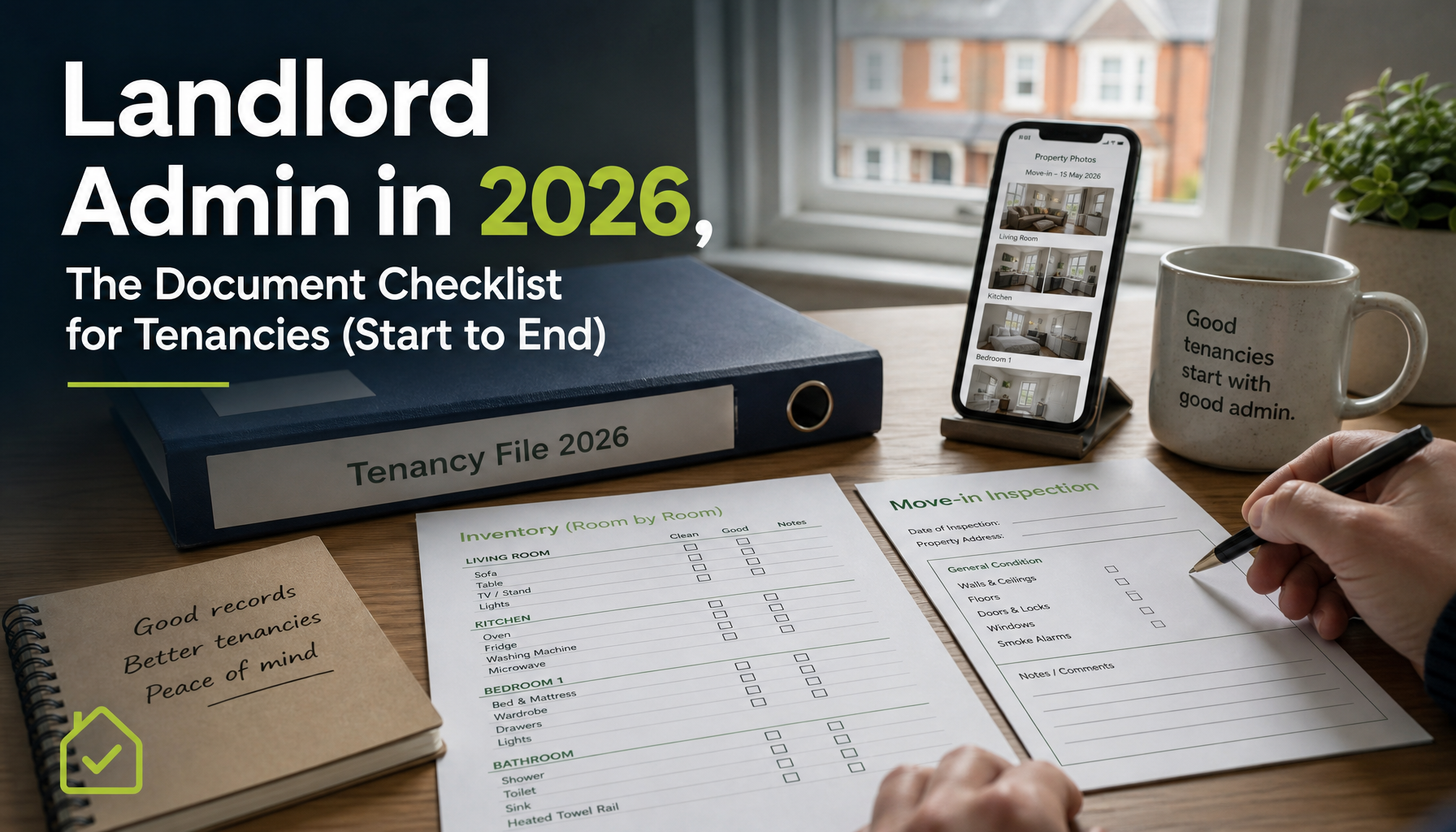
Running a rental is more than collecting rent. In 2026, good landlord admin Ireland is about keeping clear, consistent paperwork across the whole tenancy lifecycle. When documents are missing, it can create avoidable delays around inspections, renewals, deposits, and handovers. This guide provides a practical landlord tenancy document checklist Ireland, from the first day you identify a tenant through to returning keys and closing the file.
Important note: this is a document planning checklist, not a substitute for legal advice. Requirements can vary by tenancy type and circumstances, so when in doubt, confirm your obligations with qualified professionals or trusted official guidance. For general housing guidance in Ireland, you can also start at Citizens Information.
1) Before the tenancy starts, your pre-let document pack
Before keys change hands, set up a tidy folder (digital and, if possible, a physical copy). Many landlords find it easier to create a sub-folder for each tenancy, then keep a scan of every signed page and relevant email trail.
- Property details sheet: address, room layout, included items (appliances, furniture, parking), heating type, and any special features (for example, alarm system or onsite bin arrangements).
- Energy and compliance documents: retain the latest energy related documentation you have, plus any certificates or compliance paperwork you were given when the property was prepared for rental.
- Inventory and schedule of condition: a detailed written inventory with dates, photos, and room-by-room notes. This is the foundation for later comparisons at move-in and move-out.
- Any servicing records you provide to tenants: for items you manage directly, keep records of servicing dates and receipts. If the tenant arranges servicing for their own equipment, document what applies.
- Tenant application records: keep basic selection and approval materials you are comfortable storing. If you used a reference provider or screening service, store the outcomes and expiry dates.
- Right to rent or identity checks, if applicable: only keep what you are entitled to keep, and store it securely. Again, confirm any obligations relevant to the tenancy type and your circumstances.
Pro tip: label your photos consistently. For example, “LivingRoom_01_MoveIn”, “Kitchen_02_SanitaryUnits_MoveIn”. It makes end-of-tenancy comparisons far simpler.
2) The tenancy agreement and move-in paperwork
This stage is where many landlords lose track. The key is to create a complete set of signed documents and evidence of what was agreed.
- Tenancy agreement: signed copies for landlord and tenant. Keep all pages, schedules, and any addenda.
- Schedule of rent and payment method: include the rent amount, payment dates, and how rent is paid. If there are agreed standing instructions, store proof.
- Deposit information: keep the deposit agreement documentation and any related receipts or confirmations. Record deposit amount, date received, and any agreed conditions relating to deductions, if relevant.
- Rent book or payment confirmation: depending on the method used, maintain bank confirmations or payment statements.
- Utilities and meter readings: document meter readings (gas, electricity, and water if relevant) on the move-in date. Attach a short note stating who is responsible for which bills.
- Keys and access records: keep a written note of the number of keys issued, any fob or access codes provided, and where you wrote down any initial set-up steps (for example, alarm codes, Wi-Fi details for landlord-provided routers).
- Move-in inspection record: sign off the initial condition review based on the inventory and schedule of condition.
- Communication log: start a simple ledger or spreadsheet for important items. Include dates and a short summary for calls, emails, maintenance requests, and responses.
If you are advertising a rental or listing a property for letting, it can help to review what you promised in the listing and align it with the inventory you will later compare against. You can also browse listings at Browse rentals on RightPlace.
3) During the tenancy, keep tenancy records organised
During a tenancy, admin work tends to expand. A good system keeps it manageable. Aim to update your file as issues arise, rather than leaving everything for the end.
- Maintenance request records: keep the tenant’s report (email or message), the date, and what action you took. Where relevant, store contractor invoices and job completion notes.
- Repairs and upgrades: record the reason for the work, the scope, contractor name, and dates. Keep any warranties or receipts provided.
- Safety-related documentation: if you carry out any safety checks or servicing during the tenancy, retain certificates and service reports.
- Inspection documentation: if you conduct periodic inspections, document the date, what you checked, photos (if appropriate), and any outcomes or agreements.
- Rent payment and arrears tracking: maintain an up-to-date statement of rent paid, outstanding balances, and any agreed payment plans. Keep a consistent record of communications relating to payment.
- Written communications: store key emails and letters, including updates to addresses for service and changes to tenant contact details.
- Changes during the tenancy: document any agreed changes, such as new occupants, replacement of appliances you supply, or updated access arrangements.
Good tenancy records are useful even when everything runs smoothly. If a tenant dispute arises later, your documentation can show the property’s condition over time.
4) Renewals, variations, and end-of-term admin
When the tenancy approaches renewal, the landlord’s job is to confirm what is changing, what is staying the same, and what is still current in your documentation.
- Renewal paperwork: signed renewal agreement or documented variation. If the rent changes, store how the figure was agreed.
- Updated inventory if needed: if new appliances or furnishings were introduced, ensure the inventory reflects what the tenant has been using.
- Any updated compliance or servicing documents: if checks are due, do not rely on older certificates in the file. Add the most recent.
- End-of-term notice tracking: keep a timeline of important dates and copies of any notices issued or received.
- Pre-move-out planning: agree on dates for the end inspection and any requirements for cleaning or access.
For landlords, renewals can be a natural point to check whether the property still matches the current market expectation for the area. If you want to understand how demand is shifting for renters, RightPlace research is a useful starting place via RightPlace Research: What Irish Renters Actually Want in 2026 (and where demand is shifting).
5) End-of-tenancy, move-out inspection and settlement file
The end-of-tenancy stage is where paperwork can make or break outcomes. Your goal is to protect clarity on condition, responsibilities, and any agreed process for finalising the tenancy.
- Move-out notice and scheduling confirmations: keep proof of agreed inspection time, access arrangements, and any tenant instructions you receive.
- Final meter readings: record all relevant readings on move-out day. Take photos where possible.
- Keys return record: document when keys or fobs were returned, the condition of any access hardware, and whether any items are missing.
- Final inspection report: use the same inventory format as move-in. Include photo evidence and a room-by-room assessment.
- Cleaning and waste handling evidence: if cleaning standards were agreed, keep relevant evidence (photos, receipts if applicable). Only store and share what is reasonable and proportionate.
- Appliance and item checklist: confirm whether items supplied by the landlord are present, working, and in the condition expected. Note any damage with photos.
- Deposit settlement documentation: if there is a process for deductions or settlement, keep the calculations, evidence for any charges, and copies of any correspondence.
- Forwarding address confirmation: verify where any documents or final communication should be sent.
- Close-out communications: retain copies of final letters and confirmations that the tenancy has concluded.
Practical approach: conduct the final inspection with the tenant present if possible. If not possible, document why and store evidence of attempts to agree a time.
6) A simple document retention system for landlords
Landlord admin Ireland becomes easier when you have a consistent filing method. You do not need anything complicated, but the approach should be repeatable.
- Folder structure: create “Tenancy Start”, “During Tenancy”, and “End of Tenancy”. Within each, create “Agreements”, “Inventory”, “Inspections”, “Maintenance”, and “Correspondence”.
- Naming convention: use dates in the same format (for example, 2026-09-12) so files sort correctly.
- Backups: keep a cloud backup if you store digitally. For paper documents, consider scanning key pages like the signed agreement and inspection reports.
- Security: keep tenant data secure. Limit access to people who need it, and avoid storing sensitive documents on personal devices without protection.
If you also handle sales activity or manage multiple properties, you may find it helpful to keep a separate archive for each address. You can browse buying resources on Properties for sale in Ireland if you are also looking at portfolio decisions, but keep your rental files distinct.
7) Quick checklist you can reuse for every tenancy
Use this compact landlord tenancy document checklist Ireland as a quick reference before you sign, during occupancy, and when the tenancy ends.
- Before start: inventory and schedule of condition, compliance documents you have, property details sheet, move-in photo pack preparation.
- At start: signed tenancy agreement, deposit documentation, rent payment details, move-in inspection record, meter readings, keys/access log.
- During tenancy: maintenance requests and invoices, inspection records, safety or servicing certificates, rent payment tracking, key communications log.
- Renewal/variations: signed renewal paperwork, updated schedules if needed, updated compliance where relevant.
- End of tenancy: move-out inspection report with photos, final meter readings, keys return record, settlement documentation if applicable, close-out communication and forwarding address.
Final thoughts for 2026 landlord admin
In 2026, the landlords who feel most in control tend to be the ones who document early and update consistently. A strong paper trail does not mean you expect trouble. It simply means that if something changes, you can show what was agreed, when it was agreed, and what the property was like at each stage.
If you are setting up a new letting workflow for the year ahead, start by building your template folder and inventory format now. Then you will not have to scramble later. For more landlord-focused guidance and practical resources, keep an eye on RightPlace updates at RightPlace news and guides and explore current rental listings at /property-to-rent.