The Rise of Commuter Towns, Where to Buy for Affordable Living in 2026
By David S · 29 July 2026
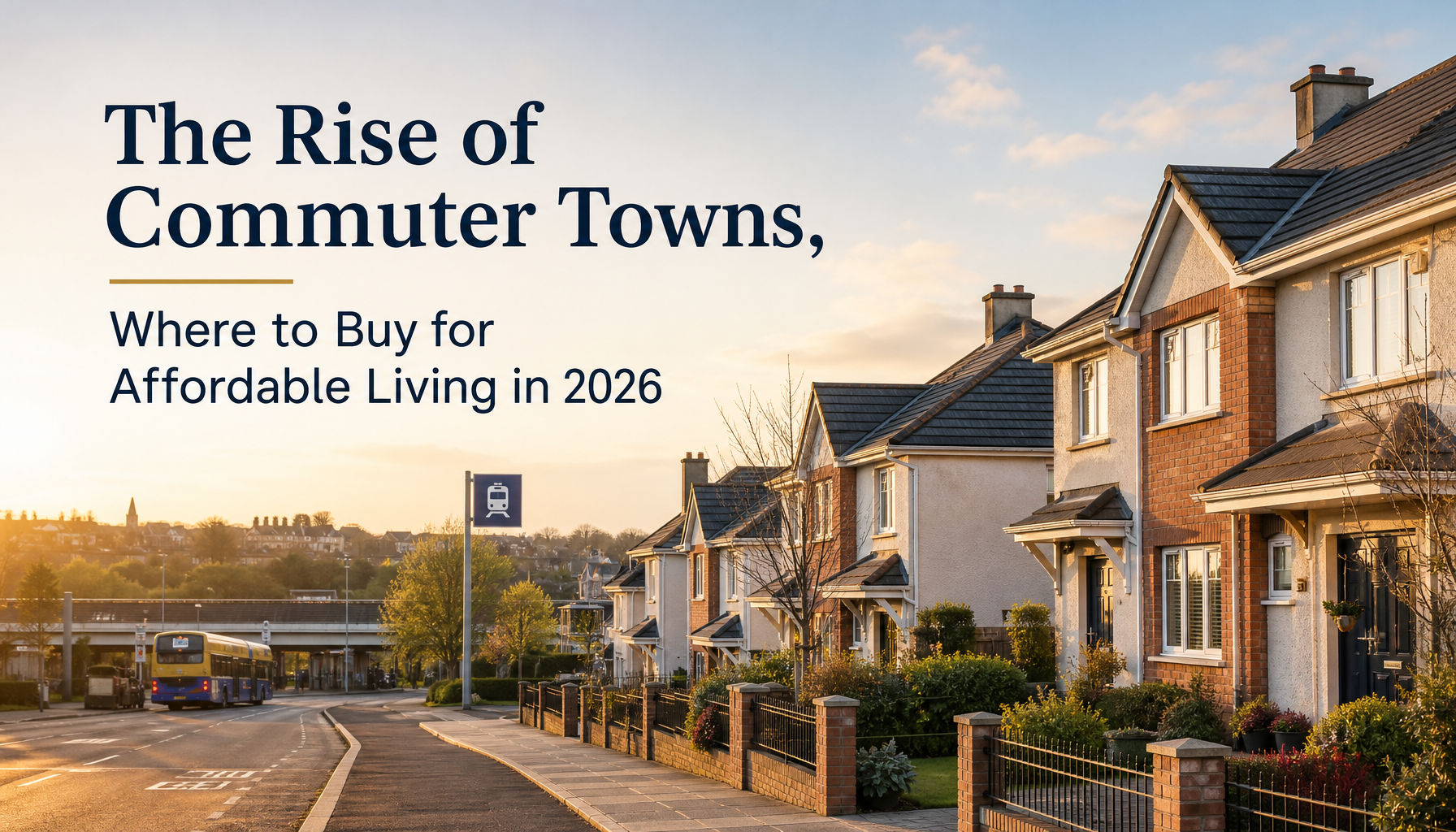
In 2026, the idea of buying “closer to work” often means looking well beyond Dublin city limits. For many households, commuter towns Ireland offer a more realistic path to affordable housing while keeping daily routines manageable. If you are searching for property near Dublin, the question is not only “how much is the house?”, but also “how reliable is the commute, and what will the area feel like day to day?”
Commuter towns have grown in importance as transport options, remote working patterns, and family needs have all shifted. Yet affordability can be a moving target, because what is “good value” depends on the home itself, the estate’s age and condition, and local demand. This guide is designed to help you approach the search methodically, with practical checks before you fall in love with a listing.
Why commuter towns are growing in 2026
Several factors are pushing more buyers towards towns and villages within reach of Dublin. First, many buyers want a balance between space, schools, and everyday amenities, without the price tag of the capital. Second, Dublin’s job market still pulls heavily, even as hybrid work becomes more common for some roles. That combination often favours locations where you can get to Dublin reliably when you need to, while still living in a community that feels established.
At the same time, buyer expectations are changing. People increasingly compare the “whole cost of living” for a location, including transport time, energy performance of older homes, and how easy it is to shop, exercise, or access services. If you are evaluating property near Dublin, consider that the best deal may not be the cheapest asking price, but the one that reduces daily friction and long term maintenance.
How to define “affordable” when buying near Dublin
Affordable housing is not only about price per square foot or the headline figure. In real life, affordability is about the match between your budget and the ongoing costs you cannot avoid. Before you shortlist any commuter towns Ireland, it is worth listing the cost categories that typically catch buyers off guard.
- Upfront costs beyond the purchase price: consider costs such as surveys, legal fees, and other transaction expenses. If you are unsure, review guides and ask a professional.
- Condition and building fabric: heating systems, insulation levels, roof age, dampness, and the standard of internal finishes can materially change your annual spend.
- Ongoing energy costs: homes with poor ventilation or inefficient heating can quickly erode “affordability”.
- Travel time and travel expenses: if your commute is frequent, even moderate travel delays can affect your quality of life and costs.
For a wider sense of the current market backdrop, you can also look at recent property transactions and price reporting. While you should still rely on verified sources for any individual decision, it can help to understand whether sold prices appear to be rising or stabilising in the areas you are targeting. The Irish Times property section can be a useful starting point for broader context, and you can cross reference with local sold data where available.
Choosing a commuter town, what to check before you buy
Once you have a shortlist of commuter towns Ireland, use a structured checklist so you are not swayed only by the photos. The most common mistake is focusing on the property alone and forgetting the surrounding reality.
1) Commute reality, not just distance
Distance is a poor proxy for commute quality. In 2026, some routes may be predictable in off-peak periods but challenging at peak times. When inspecting a property, it is reasonable to ask yourself, “How will I get there at 8 am, 5 pm, and on a bad weather day?” If you can, do a trial run at a realistic time. Also check how walkable the immediate area is to local services, because you may rely on those daily rather than jumping straight in the car.
2) Estate type and future upkeep
Commuter towns include everything from older housing stock to newer estates. Each comes with its own risks and advantages. Older homes may offer larger plots or more character, but you need to be alert to roof maintenance, window upgrades, and damp management. Newer builds can mean improved efficiencies, but you still need to examine snagging history and how estates settle over time.
If you are comparing an older home versus a newer one, ask for clarity on what has been upgraded and when. Don’t assume everything is “fine” just because the house looks tidy. You can also consider checking our guide on new-build homes in Ireland in 2026, including snagging timelines and what to look for during viewing and after handover.
3) Services that support daily life
Property near Dublin is often chosen for work access, but your evenings and weekends matter just as much. Look for practical services within the town: supermarkets, pharmacies, healthcare access, sports clubs, and options for secondary schooling if you have children or plan to. Even basic factors such as parking availability, pedestrian lighting, and local traffic patterns can shape how “liveable” an area feels.
4) Transport links and practical alternatives
Rail access can be a deciding factor for many buyers, but you should not ignore bus routes, cycling links, and car parking arrangements. If you ever commute occasionally by alternative modes, it helps to check what is realistically available from that street, not only from the town centre. If the property is on the edge of a commuter town, confirm you can access the main transport nodes without adding unsafe walking routes or long detours.
Where to look within commuter towns
Even within the same town, properties can vary substantially. Typically, homes closer to local centres may have stronger rental demand, while quieter residential pockets may appeal to owner occupiers seeking lower noise. Where you land depends on what you value most, such as convenience, family safety, or future resale expectations.
For buyers who may consider renting later, understanding rental patterns can be useful, but do not assume future performance. Use local market knowledge, and consider speaking to a reputable agent about comparable properties and realistic rent expectations. If you want to explore current opportunities, browse listings across property for sale and compare similar homes across different estates or neighbouring villages.
First-time buyers and the commuter town strategy
Many first-time buyers focus on securing a deposit and achieving mortgage approval, but a smart commuter town strategy can also protect you from regret. In 2026, a deposit that stretches your budget might leave less room for renovation work or future upgrades, so it is worth thinking about whether the property is “move-in ready” or likely to require significant spending.
You may find it helpful to read a reality check guide on first-time buyer deposit size, approval, and waiting times. For those who are considering government supports where eligible, check the Help to Buy eligibility guidance and common application pitfalls. These resources are best used as an overview, and you should confirm your personal situation with the appropriate professionals.
New builds versus established homes, trade-offs to consider
New homes can be appealing for energy efficiency and updated layouts, which can support lower running costs and easier day-to-day living. However, they can also be affected by construction timelines, estate completion progress, and whether the local area has the services you need yet.
Established homes can feel more “settled” and may have mature gardens and clearer neighbourhood dynamics. The downside is that older wiring, plumbing, and heating systems could require updates. If the home is part of a larger estate, check for a pattern of refurbishment, such as upgraded windows or updated external finishes, because that often reflects how residents maintain the area.
If you are actively browsing, a good approach is to compare like for like. For example, if one commuter town listing is an older three bed house with higher maintenance needs and another is a newer build with better energy performance, calculate the likely impact on your monthly budget rather than only comparing the asking price.
Budgeting for the “hidden” commute and lifestyle costs
Commuter life has costs that do not show up on property price tags. Fuel, public transport tickets, parking, and even car maintenance can add up, especially where the commute is daily. In addition, time itself is a cost, and a longer commute can affect your ability to run errands, pick up children, or attend activities.
When evaluating commuter towns Ireland, try to estimate how your routine will look during both busy and calm weeks. Then look at whether the property’s location helps you. A home within easy reach of local shops and services can reduce car trips and help you feel more rooted, even if the commute to Dublin is not short.
How to use RightPlace.ie effectively in your search
To narrow down quickly, start with the type of home you can realistically manage in 2026. Then refine by location and estate profile. Use filters to compare similar layouts, and open each listing’s images and description with the same critical lens you would use in person.
If you are exploring options to rent first while you gather information, consider viewing availability through property to rent to understand what the local market looks like and what is in demand. For buyers who want to keep options flexible, reading Renting in Ireland in 2026: how to compare tenancies before you sign can help you avoid common missteps.
Meanwhile, if new builds are part of your plan, compare availability across new homes for sale, and use the new-build checklist guide to guide your viewing process.
Final thoughts, plan for value beyond the listing
Commuter towns Ireland are not a single category, they are a range of communities with different strengths. In 2026, the winning approach is to buy for a lifestyle you can sustain, not only for a shorter route to Dublin on paper. Prioritise commute reliability, check the practical condition of the home, and consider how the area supports daily life. If you do that, you will be in a better position to find affordable housing that actually works for you over the long term.
For broader market context and property coverage, you can browse the Irish Times Property section, then use RightPlace.ie to compare current listings in your chosen commuter town areas.