Help to Buy updates for 2026: eligibility, documentation, and timeline planning
By David S · 24 October 2026
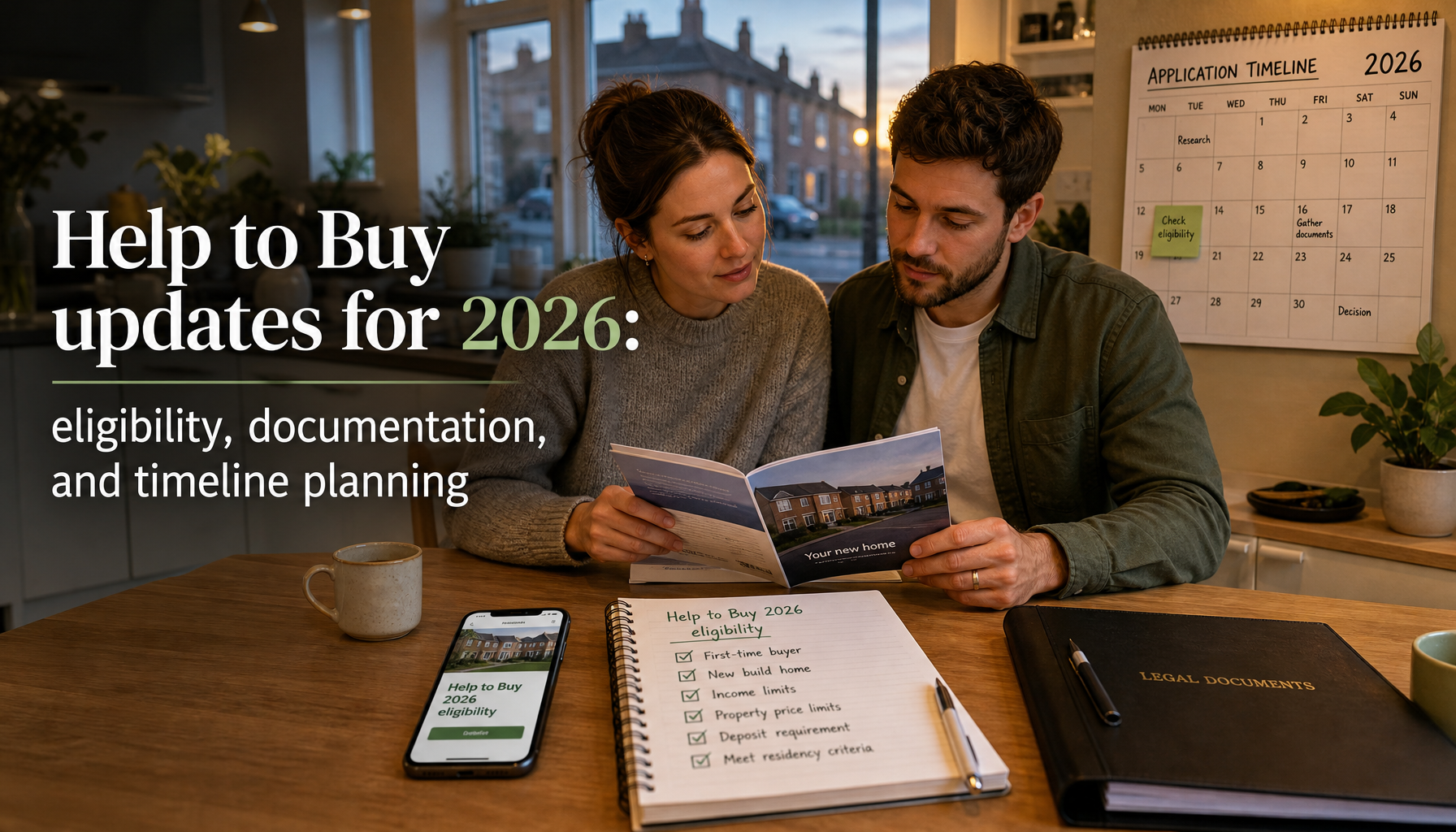
Applying for Help to Buy in 2026 can feel like a second job, on top of viewing homes, comparing prices, and trying to line up a mortgage. The good news is that with the right preparation, you can reduce avoidable delays and make sure your application is consistent from start to finish. This buying guide focuses on the practical side of Help to Buy 2026, including eligibility checks, the most common themes you will be asked to consider in your application, and how to build an application timeline that fits around property viewings, offers, and legal processes.
Important note: rules and procedures can change. Before you rely on anything here, cross-check the latest guidance on the official Citizens Information housing pages and consider speaking to a qualified professional, especially if your situation has any complexities.
What Help to Buy 2026 is really about, and who it helps
Help to Buy is designed to support eligible first-time buyers to purchase a home. For many applicants, it can make the deposit and purchase costs more manageable, but the scheme is not a free-for-all. Eligibility, the property you buy, and your documentation all matter.
When planning for Help to Buy 2026 eligibility, start by treating the process as three connected workstreams:
- Eligibility fit: you meet the scheme criteria as an applicant.
- Property fit: the home you intend to purchase needs to align with what the scheme permits.
- Paperwork fit: your evidence needs to match the details you provide.
If any one of these is out of alignment, you risk having to adjust later, which can be costly in time and stress during a live property transaction.
Help to Buy 2026 eligibility, the practical checklist
To understand Help to Buy 2026 eligibility, focus on clarity. The most common problem areas for applicants are not necessarily complicated legal questions, but inconsistent answers between forms, supporting documents, and the final application details.
Use this checklist approach to confirm that you and your planned purchase generally align with the scheme requirements:
- First-time buyer status: confirm you meet the first-time buyer conditions as defined for the scheme.
- Household and ownership details: ensure the names and personal details you intend to use are consistent with your application and any documents you will provide.
- Purchase type: consider whether the purchase is eligible in the way you plan to proceed, whether you are buying an existing home or a new build.
- Affordability reality: even with the scheme support, you still need a mortgage and the ability to complete the purchase. Build in your own cash and ongoing costs.
- Timeline realism: avoid starting an application without a plan for how quickly you could proceed to completion if your application is approved.
For many buyers, it is the timing that causes the most friction. You may be ready to make an offer, but eligibility checks and documentation can take time. This is why building an application timeline before you commit to a specific property can be as important as understanding the eligibility rules themselves.
Help to Buy documents, what to get ready before you apply
Help to Buy documents are where most applicants lose momentum. The goal is not to collect everything blindly, but to gather the right evidence early and make sure it is legible, accurate, and aligned.
While the exact list of documents can vary depending on your circumstances and the specifics of the purchase, these are the types of records that commonly become necessary in housing applications:
- Proof of identity and personal details: documents showing your identity and the personal information used in the application.
- Evidence related to your application circumstances: documentation supporting the information you declare as part of eligibility.
- Home purchase information: details about the property you plan to buy, aligned with your solicitor and the contract process.
- Supporting paperwork for your finances: you may need evidence relevant to your borrowing ability and purchase plan. Treat this as part of your overall mortgage readiness, not just Help to Buy.
Practical tip for 2026 buyers: create a single folder, digital and physical, labelled with the same names you will use in your application. If you have multiple documents with similar names or different spelling formats, resolve those discrepancies now. During a live purchase, even minor mismatch issues can lead to delays when you need to submit clarification.
If you are unsure how your documentation will be assessed, use the scheme guidance as your primary source and speak to your solicitor for document-specific advice, particularly around contract and timeline planning.
Building an application timeline around a real purchase in 2026
An application timeline is only useful if it matches how property transactions actually move. In 2026, many buyers will be balancing viewings, mortgage approvals, and solicitor availability. If you treat Help to Buy 2026 as a separate process, you can end up with two deadlines fighting each other.
Here is a practical timeline framework to help you plan, without assuming any particular approval speed:
- Step 1, weeks before you make an offer: confirm your Help to Buy 2026 eligibility position and start collecting Help to Buy documents in a structured way. If you are also preparing a deposit plan, align both processes early.
- Step 2, before contracts: when you shortlist a property, confirm the property aspects that need to align with Help to Buy and discuss timing with your solicitor.
- Step 3, after you make an offer: keep your information consistent across forms and updates. Any change to personal details or the purchase plan should be handled carefully and communicated through the correct channels.
- Step 4, during the contract period: ensure documentation stays ready for submission and that your solicitor is working smoothly with you on contract steps.
- Step 5, completion readiness: plan your cash flow and completion steps alongside the scheme process so you are not scrambling at the end.
If you want more context on the overall buying rhythm, the RightPlace guides on new-build timing and mortgage basics can help you understand where delays typically appear and what you can control. See also: New homes in 2026: timelines that actually matter, site handover, snagging, and move-in for planning if you are considering a new build, and Mortgage basics for 2026 buyers: understanding repayment vs term trade-offs for the bigger mortgage picture.
Where buyers get stuck, and how to avoid common delays
Even well-prepared applicants can hit bumps. These are common issues, and the mindset you can use to reduce risk:
- Waiting too long to confirm eligibility: if you are only checking Help to Buy 2026 eligibility after you fall in love with a home, you may lose time when you need to adjust the plan.
- Submitting incomplete or inconsistent documentation: avoid last-minute uploads and double-check that names, dates, and reference details match.
- Underestimating the contract timeline: property transactions do not pause for scheme processes. Coordinate with your solicitor early.
- Not factoring in practical move-in costs: even with scheme support, completion costs and moving expenses remain your responsibility. Consider budgeting broadly.
For readers comparing options across the market, you can browse relevant listings at Homes for sale on RightPlace and new-build options at New homes for sale. Keeping your options broad can reduce the pressure if one purchase plan does not align with Help to Buy.
Choosing a home in a way that supports your application
Help to Buy 2026 eligibility is only one part of the equation. The home you choose must also be a good fit for the scheme requirements. Because your application may be influenced by the property details, it helps to treat “scheme fit” as a purchase criterion, not an afterthought.
When viewing homes, focus on practical items you can assess quickly:
- Condition and suitability: does the property meet your living needs, and what repairs might be required?
- Documentation availability: are key property details ready for your solicitor to review efficiently?
- Timing fit: does the vendor’s timeline align with your application timeline and your ability to complete?
If you are buying a home and want to reduce uncertainty around costs and responsibilities, RightPlace also covers buyer budgeting topics such as Irish property tax and costs in 2026: what buyers and sellers should budget for. That kind of planning complements Help to Buy by ensuring you are not surprised by other essential expenses.
How to use official guidance, without losing time
Instead of relying on hearsay, use official sources to confirm the current framework. Citizens Information provides up-to-date housing guidance and is a useful starting point for general housing support information. You can review the relevant housing pages here: https://www.citizensinformation.ie/en/housing/.
A time-saving method that works for many buyers is to create a “living checklist”:
- Before you apply: confirm eligibility and document requirements as stated in the official guidance.
- During your application: note any references to forms, upload formats, or timelines, and keep them in your file.
- Before completion: confirm any remaining steps and plan your final cash position.
This reduces the chance of needing corrections while you are already committed to a purchase.
Next steps for 2026 buyers planning their Help to Buy application
If you are actively preparing to buy in 2026, your immediate actions should be simple and measurable:
- Confirm Help to Buy 2026 eligibility: read the official guidance carefully, then write down your checklist items so you can track progress.
- Gather Help to Buy documents early: organise your evidence in one place and resolve inconsistencies in personal details.
- Plan an application timeline: map out what needs to happen before you make an offer, after you make an offer, and before completion.
- Coordinate with your solicitor: align Help to Buy steps with the contract process so delays do not cascade.
Done well, the Help to Buy process becomes a structured part of your overall purchase plan. It is not only about meeting eligibility, it is about maintaining momentum from the moment you start viewing homes until the day you get the keys.
If you are still browsing, you may also want to explore how new-build timelines can affect your planning at New homes in 2026: timelines that actually matter, site handover, snagging, and move-in, and consider broader first-time buyer preparation such as Irish first-time buyers in 2026: how to prepare your deposit plan (before you apply for a practical approach to cash planning.