Best commuter towns near Dublin in 2026 (with what you’ll actually pay)
Area Guides · By David S · 26 July 2026
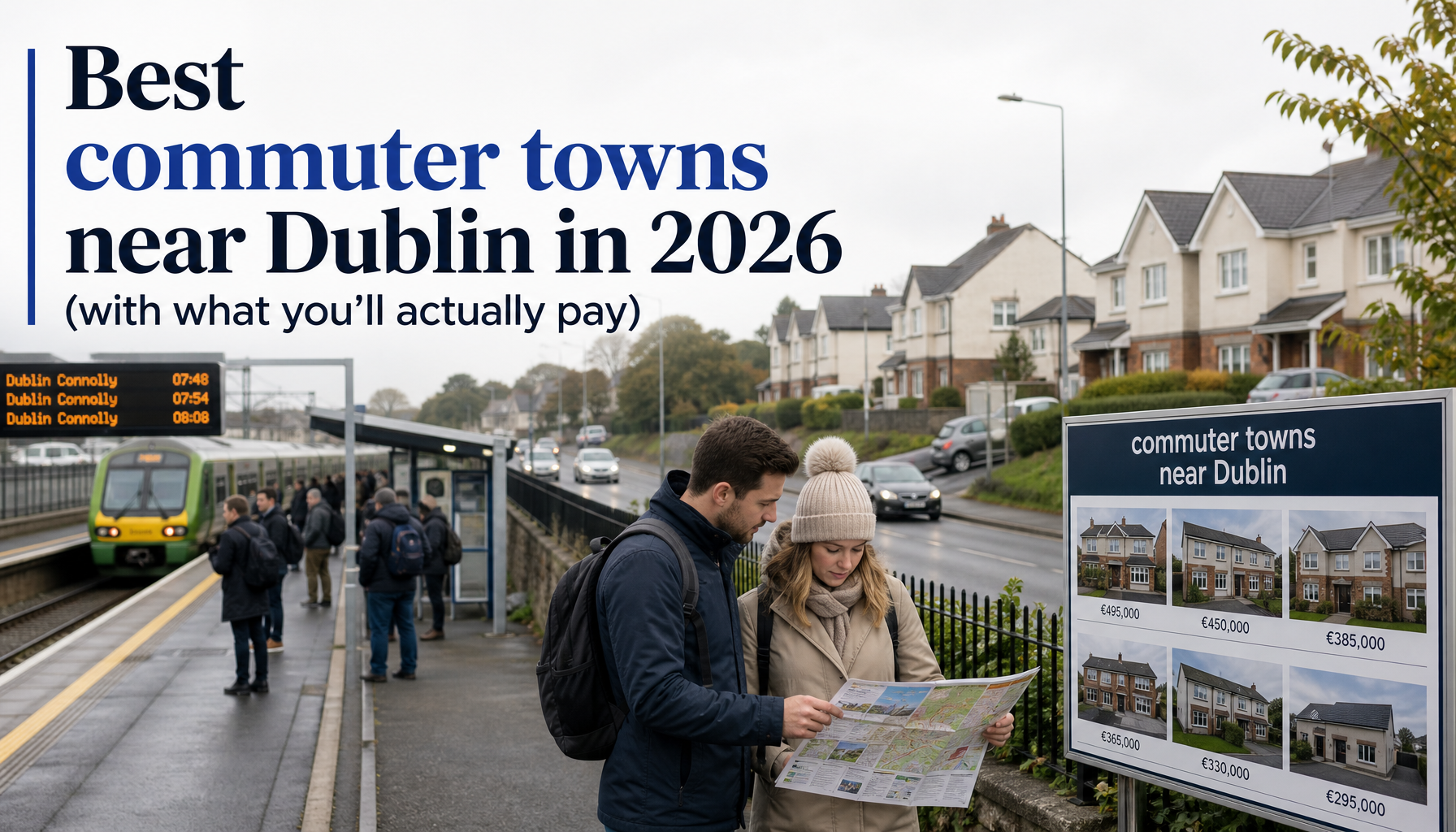
Choosing commuter towns near Dublin is rarely just about distance. In 2026, buyers are weighing daily travel time, school catchments, housing supply, and the type of home available at a realistic budget. The tricky part is that price tags can look similar online while real value varies widely by estate design, property condition, and how convenient the location is for road and rail.
This area guide looks at common commuter hubs along the main travel corridors and gives you a practical way to think about property prices commuter belt areas. It also includes the homebuying checks that often save money and frustration later when you are buying a home near Dublin.
Quick reality check, what “commutable” means in 2026
In many parts of the commuter belt, the difference between a good commute and a painful one can come down to a single junction, bus stop, station access, or how early you need to leave. Before you compare house prices, decide which travel mode you will rely on most often.
- Rail users: walking distance to stations matters more than overall town size.
- Road commuters: look at peak-hour congestion and whether your route has multiple options.
- Hybrid commuters: consider where you can park, drop off kids, and switch modes if traffic changes.
If you are actively browsing, you can use the RightPlace listings to compare the types of homes currently offered across different areas. Start with properties for sale and narrow by location when you find a town you like.
How much you’ll pay, a practical way to compare commuter towns
Prices vary because supply varies. A town with lots of modern family homes will often have different pricing patterns to a town where older terraces and smaller sites dominate. Rather than chasing headline numbers, compare what’s actually available in the market right now, then adjust for condition and convenience.
For a realistic budget planning approach, think in ranges by home type, then add a contingency. For example, a townhouse in a well-located pocket may price close to a detached home elsewhere if the detached stock is older or needs work. Also remember that “near Dublin” does not mean “cheap”. Demand for commuter convenience is persistent, especially where schools and transport are strong.
Commuter towns along the N1, North corridor
Navan is a key example of a larger commuter town north of Dublin. It can suit buyers who want more space and a broader housing choice than you might find closer in. However, the commute profile will depend heavily on whether you travel by road, and what time you typically start work.
What you’ll actually pay: In most northern corridor towns, expect lower absolute prices than the core Dublin suburbs, but still a premium compared with rural areas further out. Within town, pockets near amenities and transport routes tend to command stronger interest.
- Look for value: homes that are priced for their condition can be the better long-term deal, provided the issues are not structural.
- Be cautious: properties with visible damp signs or poor ventilation can become costly quickly.
For buyers comparing housing stock, browsing current listings on RightPlace helps you see what is being offered in each town and how quickly listings change.
East Coast commuter towns, Dublin to the east
On the east side, many people aim for towns where road connections are relatively straightforward and daily errands stay close to home. In these locations, the “commuter premium” is often driven by lifestyle appeal, coastal walks, and established communities.
What you’ll actually pay: East-coast commuter towns can be expensive, particularly for homes with modern layouts or good access to schools and transport. Even when a town feels slightly further out, demand can still lift prices.
- Best for families: areas with a mix of period housing and newer estates can give you options at different price points.
- Watch for trade-offs: some pockets may feel convenient but lack parking, have narrower roads, or be built around older estate plans.
If you prefer to compare with rental availability first, you can also look at rental listings to gauge how tenants experience the area, especially if you plan to spend time commuting before buying.
Western and south-west commuter belt, practical family choices
In the western and south-west corridors, many buyers focus on towns where day-to-day life is easy, and where access to Dublin is manageable without constantly fighting traffic. These commuter towns often have a stronger spread of housing types, from apartments to detached homes.
What you’ll actually pay: Expect mid-range pricing for many family homes, with higher costs for newer builds and for estates that are well regarded locally. Older stock can look attractive, but you should factor in renovation scope, especially if you need to update heating systems, insulation, and windows.
- Value strategy: consider homes that are liveable but dated, rather than those that show signs of major deferred maintenance.
- Timing matters: if you are trying to buy a certain type of house, check how long similar homes have been listed and whether the market is moving quickly.
When you’re comparing homes in different towns, RightPlace can help you keep the shortlist tight by focusing on sale type, price, and property details. Start at properties for sale and refine from there.
Rail-linked commuter towns, where station access can trump distance
One of the biggest drivers of commuter-town pricing is station access. Towns with better rail links can feel closer to Dublin even when they are further on the map. In 2026, buyers who commute by train still prioritise stations, walking routes, and whether services align with work schedules.
What you’ll actually pay: homes in convenient station areas often cost more, and the range can widen quickly. You might find a broad spread from apartments and terraces to larger houses, depending on the town’s development pattern.
- Check the daily reality: how long is the walk at typical weather times?
- Parking and drop-off: if you drive to the station sometimes, ensure there is practical parking or a realistic alternative.
Because travel convenience is so valuable, you may see the best deals appear in “next best” pockets that still have acceptable access, even if they are not the most obvious station-adjacent spots.
Buying a home near Dublin, what to check beyond the price tag
When you are buying in the commuter belt, the best results typically come from balancing lifestyle with practical due diligence. Here are checks that can protect your budget and reduce stress, regardless of town.
1) Inspect the home, but also inspect the estate
Two houses of the same size can perform very differently depending on estate design. Pay attention to roof condition, drainage, and signs of water ingress. For older stock, ask about ventilation and upgrades. For newer estates, inspect workmanship and finishes carefully.
If you are considering a new build, RightPlace has guidance that can help you plan the viewing and snagging process. See New-build homes in Ireland in 2026: checklist for snagging, timelines, and viewing new estates.
2) Compare school and childcare access early
In many commuter towns, school demand can be a major driver of buying interest. Instead of assuming catchment rules are straightforward, confirm what you can and cannot rely on for your specific address. If school access is central to your plan, ask questions before you commit.
3) Budget for the “quiet costs” that appear after purchase
Even when you negotiate well, extra spending tends to show up after moving in. Think about maintenance, furniture, decorating, broadband setup, and any immediate repairs. If you are pricing renovations, get quotes before you decide whether a home is affordable.
4) Don’t ignore the buying process timeline in 2026
The speed of a purchase can vary from one property to another. Delays happen, and planning helps. RightPlace has a practical overview of how long buying can take. Read How Long Does It Actually Take to Buy a House in Ireland? (2026 New Homes Guide).
5) If you are using financing, track rates and eligibility carefully
Mortgage costs can change across the year. It is important to track what may affect your monthly outgoings and to be clear about your approval timelines. For pointers on what to track, see Irish mortgage rates in 2026: what to track before you switch or borrow.
For first-time buyers, the deposit and approval process are often where the reality differs from expectations. If this is your situation, check First-time buyer reality check in 2026: deposit size, approval, and waiting times.
What about buying near Dublin with limited choice?
Many buyers find that the best homes do not last long once they hit the market. If you want a specific property type, consider being flexible on things you can change, such as decor, while being strict on structural and location basics. If you are open to alternatives, browsing can also include new homes where layouts and energy performance are already planned. Start with New homes in Ireland and filter by your preferred commuter towns.
Where to start your search, and how to compare towns fairly
Here is a simple shortlist method that works well in 2026:
- Pick 3 to 5 towns that fit your commute mode and family needs.
- Decide your must-haves (parking, layout, station access, garden size).
- Compare like with like by looking for similar beds and condition levels.
- Review sold-price evidence where possible to see what similar homes achieved after the initial asking price. RightPlace includes sold information through sold property prices.
As a starting point for current market options, you can browse listings on RightPlace. If rentals are your stepping stone, use rental listings to test your commute and understand what your budget buys you in real life.
Final thoughts for commuter-town buyers in 2026
The best commuter towns near Dublin for you will balance access to work, schools, and daily services, while still offering home types you can live with for years. Prices are shaped by demand and convenience, but the best value often comes from choosing the right pocket within a town, being honest about condition, and planning for the buying process timeline.
If you want to explore what is currently available, browse properties for sale and use RightPlace guides to support your decisions as you narrow down which area fits your budget and your routine.
Context note: For broader market information and transaction context, you can also consult official price register updates from the Central Statistics Office via CSO House Price Index releases.