Irish mortgage rates in 2026: what to track before you switch or borrow
Mortgages · By David S · 20 July 2026
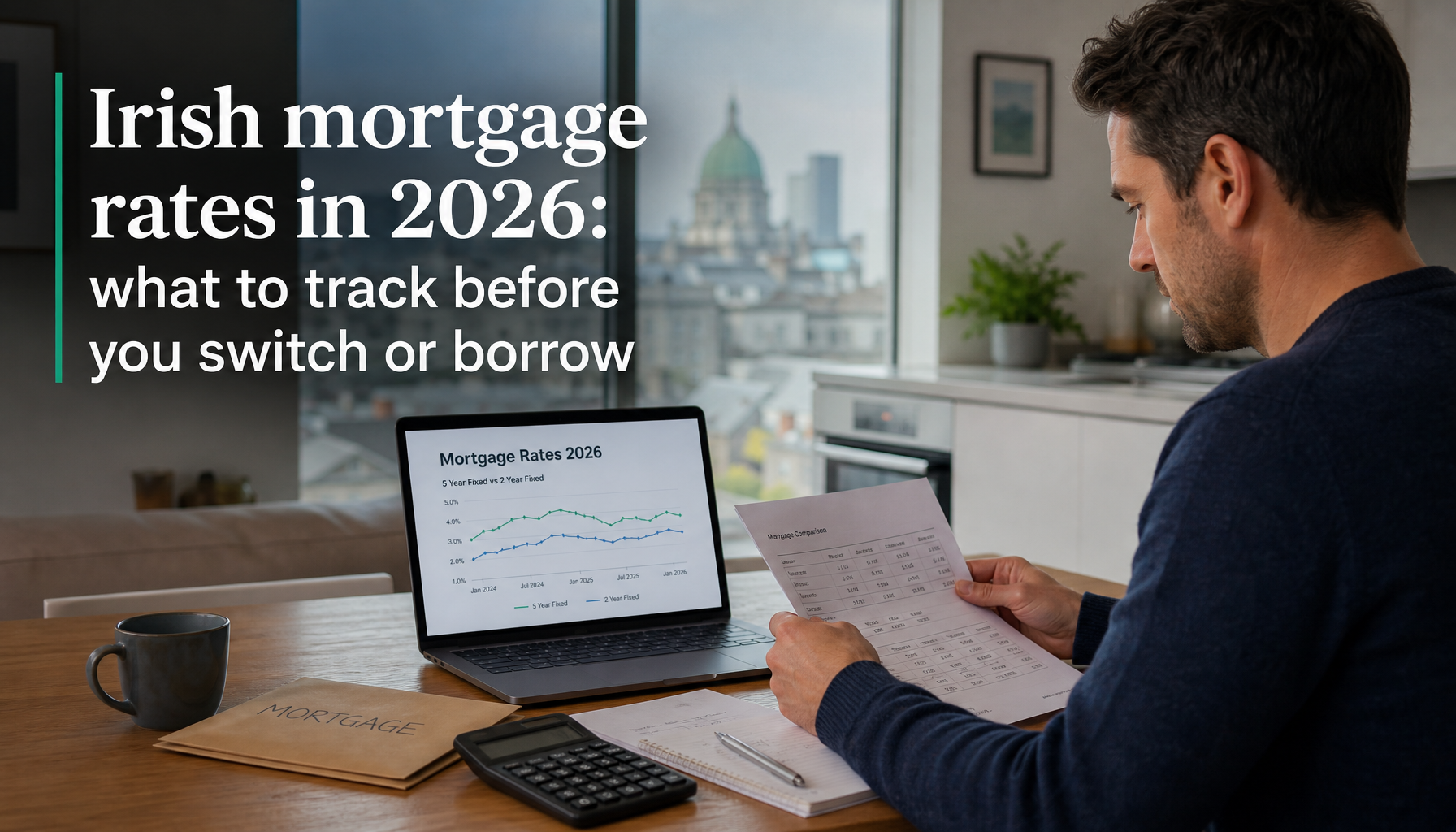
In 2026, many borrowers are watching mortgage rates 2026 closely, not just because of headline interest rates, but because the total cost of a mortgage depends on how your rate is structured, how long you stay on a particular deal, and how your budget holds up if rates change. If you are considering switching mortgage in Ireland or taking out a new loan, the practical approach is to track a set of signals and compare deals in a consistent way.
This guide is designed to help you prepare for the decisions that commonly come up in 2026. It covers what to monitor, how fixed vs variable mortgage choices can affect cash flow, and how to think about mortgage affordability before you commit. For official guidance and the latest information, you should also refer to the Central Bank of Ireland and Citizens Information, linked below.
Start with the signals that actually move your mortgage cost
When people talk about “mortgage rates”, they often mean the advertised interest rate on a particular product. In reality, your monthly payment can be influenced by other factors as well. Before you compare deals, gather the basics and then focus on what changes in 2026.
- Base interest rate environment: Mortgage pricing generally moves when overall funding and policy conditions change. Keep an eye on official updates from regulators and market announcements rather than relying only on social media or word-of-mouth.
- Your specific deal type: A fixed rate can reduce uncertainty, while a variable rate can track changes over time. If you are on a standard variable or tracker arrangement, understand what it is linked to and how often it can move.
- Deal duration and reversion: Some fixed rates are only fixed for a defined term. When the fixed period ends, the mortgage typically reverts to another rate category. The difference between the “headline” rate and the rate at which you will sit later is a key part of affordability.
- Fees and charges: Interest rate is important, but arrangement fees, early repayment charges, and product-specific costs can shift the real comparison. When comparing two offers, ask for the full picture.
The Central Bank provides consumer information about borrowing and mortgage-related topics, including what to expect from lenders and how to access information. Use the Central Bank site as your baseline for reputable guidance.
Fixed vs variable mortgage, what to track in 2026
Choosing between fixed and variable is one of the biggest decisions for many households. It is not simply a question of “which is cheaper right now”. It is about how comfortable you are with potential changes to your monthly payment.
Fixed-rate options
In general terms, a fixed rate can help you budget because the interest rate is set for a specific term. That said, you should still track the practical details:
- Length of the fixed period: In 2026, many borrowers are selecting terms based on life plans, such as staying in the home for a certain number of years.
- What happens when the fixed term ends: Find out what rate your mortgage will revert to after the fixed period. Even if the fixed rate looks attractive, affordability can change later.
- Early repayment implications: If you might sell or switch again before the fixed term ends, ask about any restrictions or charges and build that into your decision-making.
Variable-rate options
Variable arrangements can sometimes suit borrowers who want flexibility, but in a changing rate environment you should track how and when your payment could move.
- Rate movement frequency: Variable rates can change more than once. Knowing the pattern can help you plan for budgeting.
- Cash flow resilience: Consider how your household would cope if your repayment rises. This is where mortgage affordability becomes more than a “qualification checklist”.
- Switching strategy: Some borrowers start on one structure and plan to switch again at a later point. If you are thinking this way, keep an eye on timing and the costs of changing products.
Switching mortgage in Ireland, compare like with like
If you are considering switching mortgage in Ireland in 2026, the temptation is to compare two interest rates side by side. A more reliable approach is to compare the full set of terms that affect you.
Here is a checklist you can use when comparing offers from your current lender or from others.
- Compare the repayment basis: Is the quoted rate for the same loan term and repayment schedule?
- Check the term remaining: If you are in year three of a 30-year mortgage, the new deal might have a different term length or repayment pattern. It changes the total interest cost.
- Ask about any early repayment or exit costs: If you are switching away from your existing deal before an end date, costs can apply. Get the detail in writing.
- Look at the total cost over the period that matters to you: If you plan to stay for only a few years, a longer-term comparison can mislead you. Align the comparison with your likely timeline.
- Confirm the rate types clearly: Ensure you understand whether you are being offered fixed, variable, or another structure, and what it means operationally.
If you want more general mortgage context, you can also review guidance on mortgage types from RightPlace.ie. That can help you frame questions before you speak to lenders.
Mortgage affordability, use a stress test you can live with
In 2026, affordability is not just about meeting an approval threshold. It is about whether your household can manage repayments if your situation changes. Even if you qualify, the right level of risk is different for each borrower.
A cautious approach is to run a stress test. You do not need a complex spreadsheet, but you should be able to answer these practical questions:
- What would happen if repayments rose? Model a scenario where the interest rate increases and then ask whether you could still pay without sacrificing essentials.
- What happens if income changes? Consider job stability, hours, and any planned changes to childcare or commuting costs.
- How much room do you have for bills and maintenance? Home costs often rise over time. If you are buying or switching, be realistic about utilities, insurance, and upkeep.
- How flexible is your budget? If the mortgage is the biggest line item, you need to know what you would cut or adjust.
Citizens Information provides guidance for consumers and households on a range of housing topics, which can be useful when you are organising your next steps and trying to understand the process in a structured way.
Timing your switch or borrowing decision in 2026
Even with the right information, timing is critical. Mortgage rates can move, and the best deal for you may depend on when your current contract ends, when your fixed term finishes, or when you are ready to complete a purchase.
Consider these timing points:
- Fixed term end dates: Switching is often most logical when your existing deal is nearing expiry. If you switch too early, charges may reduce the benefit.
- Purchase completion timelines: If you are buying a home, your mortgage decision needs to align with the property timeline. Speak to your lender early so you are not rushing when you are under pressure from a sales process.
- Market changes: If rates are in flux, it can be tempting to wait for a perfect moment. Waiting can also carry risk if it delays progress or increases your exposure to uncertainty.
- Household planning: Your mortgage should fit your life, not only the market. A fixed rate might be “costlier” but more supportive if you have a predictable need for stable repayments over the next few years.
If you are actively house-hunting, RightPlace.ie has guides and lists that can help you plan alongside your financing. You may also find useful information in RightPlace.ie’s mortgage type explainer before you compare offers.
What documents and numbers to have ready
Whether you are switching or borrowing in 2026, having your details ready can make discussions faster and reduce the chances of misunderstandings. While lenders have their own processes, you can typically prepare by collating:
- Current mortgage balance and term remaining (for switches)
- Your current interest rate type, such as fixed or variable, and any expiry date for the current deal
- Any offers you have received, including fees and the repayment basis
- Proof of income and regular outgoings, as requested by the lender
- A simple budget summary to support your affordability stress test
If you are purchasing a home, you may also want to build a checklist for your overall timeline, including home inspection steps, snagging expectations for new-build properties, and budgeting for move-in costs. RightPlace.ie has topic guides that can complement your planning.
Common pitfalls when comparing mortgage rates 2026
To avoid costly mistakes, watch for these common issues that appear when borrowers switch or borrow:
- Comparing only the headline rate: A slightly lower rate that comes with higher fees or an unfavourable reversion rate can be worse overall.
- Ignoring the future: Many deals look good at the start. Ensure you understand what happens after the fixed period ends.
- Underestimating the total home cost: Mortgage repayments are only one part of the cost of ownership. Maintenance and insurance still apply.
- Switching without understanding exit implications: If you might not be staying long, ask about any related costs and restrictions.
- Not aligning the term with your plan: A longer term may lower monthly repayments but can increase overall interest paid.
Where to get reliable information in 2026
Before you sign or switch, rely on sources that are built for consumers. The Central Bank of Ireland and Citizens Information are both valuable starting points, particularly when you want to understand the process and what to look out for.
- Central Bank of Ireland - authoritative guidance and consumer information relevant to borrowing and mortgages.
- Citizens Information, Housing - practical, impartial information for households.
Next steps, a simple plan for borrowers in 2026
If you are tracking mortgage rates 2026 and considering your options, a practical sequence can help:
- Clarify your situation: Are you switching mortgage in Ireland, renewing a fixed term, or borrowing for a new home?
- Choose your comparison period: Align your comparison with how long you realistically expect to stay.
- Assess fixed vs variable mortgage comfort: Decide what level of payment certainty you need and whether you can tolerate possible changes.
- Run an affordability stress test: Ensure you can manage repayments if conditions change.
- Get deal details in writing: Confirm the full cost elements, not only the headline rate.
Finally, if anything in the deal documentation is unclear, it is worth asking questions and speaking with a qualified professional. Mortgage decisions can have long-term effects, so it pays to be methodical. With the right information and comparisons, you can make a confident choice that fits your household plans in 2026.