Help to Buy 2026: eligibility checks and common application pitfalls
First-Time Buyers · By David S · 14 July 2026
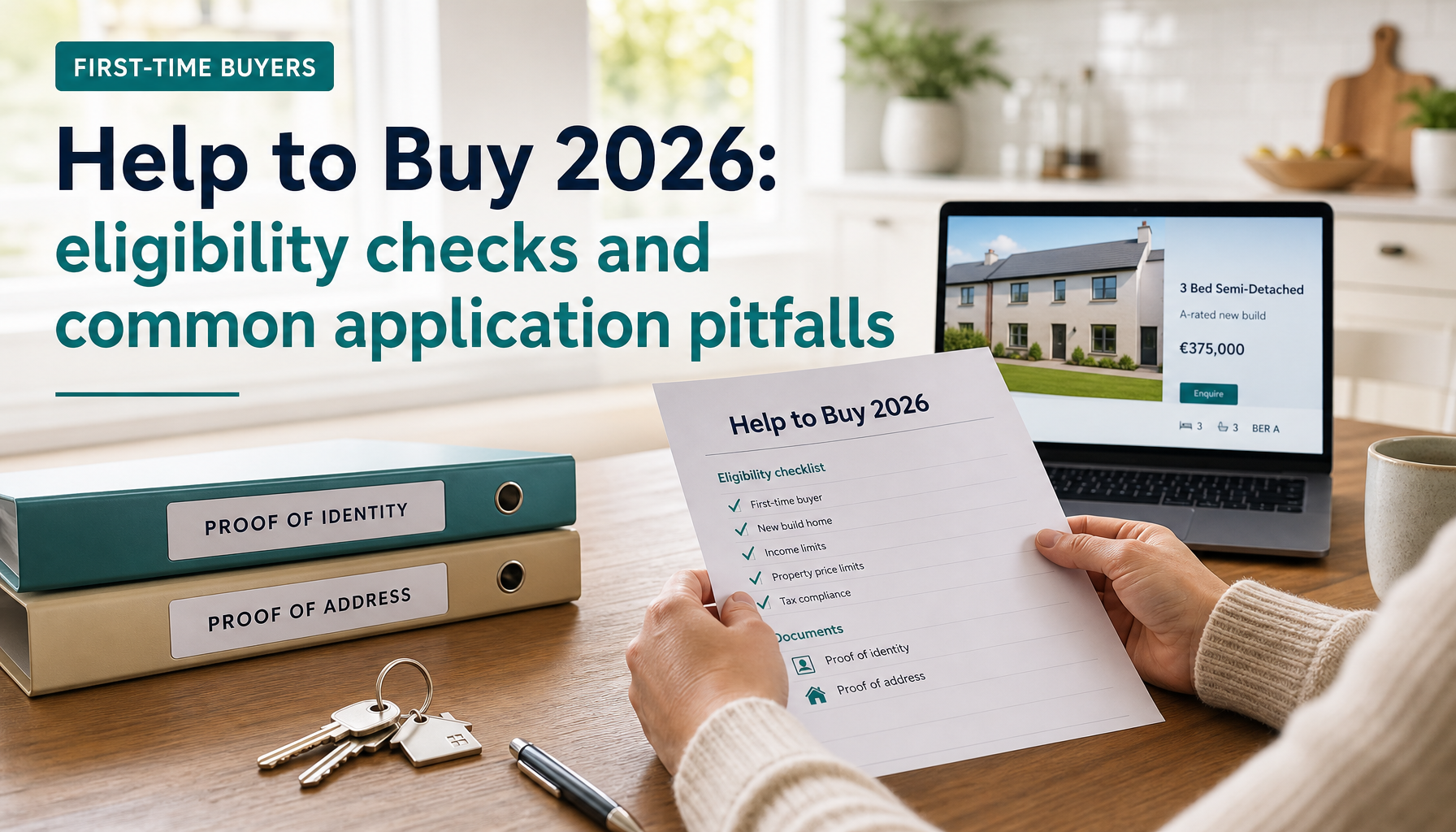
For many first-time buyers, the Help to Buy 2026 framework is a vital part of working out whether a home purchase is possible. However, experience across the market shows that most issues do not start with finding the right property. They start much earlier, during eligibility checks and the application process, when a small omission, timing mismatch, or misunderstandings about documents can create delays.
This guide is designed to help you approach Help to Buy 2026 in a practical way. It focuses on buyer eligibility, what to verify before you apply, and the most common pitfalls that can trip up applicants in 2026. It also highlights the value of coordinating early with your solicitor, lender, and the seller or developer so expectations stay aligned from offer to completion.
For general background on housing supports and housing-related guidance, it can also be useful to review information from Citizens Information.
Help to Buy 2026 at a glance, and why eligibility matters early
The first step with any government housing scheme is to understand that eligibility is not something you can safely “figure out later”. In most cases, you need to be able to show that you meet the required criteria by the time your application is assessed, and you need documentation that supports that position.
In practical terms, that means you should treat the scheme as a parallel track to your mortgage process. If your finances, property choice, or documentation preparation are not coordinated, you can end up with a buyer eligibility position that is unclear, incomplete, or inconsistent.
So, before you become emotionally attached to a particular apartment or semi-detached home, build a short checklist covering your status, the property type, and the timeline. If anything looks uncertain, address it before you make an offer or before you lock in key dates with a developer or estate agent.
Eligibility checks to do before you apply
Eligibility varies by individual circumstances, so the safest approach is to do a structured check rather than relying on second-hand advice. Below are the categories you should plan to confirm, and the type of evidence you may need.
- First-time buyer scheme status: Confirm whether you qualify as a first-time buyer under the scheme rules. If you have previously owned property, inherited property, or entered arrangements that could affect your eligibility, get clarity early rather than assuming.
- Identity and personal details: Ensure your personal details are accurate and consistent across all documents. Small discrepancies can cause avoidable back-and-forth during assessment.
- Address and residency information: If your application requires you to demonstrate residence or other status, compile the supporting documents you will need, and double-check dates.
- House purchase plan: Review the property you intend to buy and confirm it fits the scope for the government housing scheme. If you are shopping broadly, keep a shortlist of homes that are more likely to meet the scheme’s parameters.
- Timeline alignment: Check whether the scheme application process requires certain milestones to fall within specific time windows. This is particularly important in 2026 when transactions can still face scheduling pressure due to surveying, legal work, and lender steps.
Common application pitfalls in 2026, and how to avoid them
Even when applicants meet the criteria, the application process can fail on practical details. Here are common pitfalls seen in buying journeys that involve state supports, along with ways to reduce the risk.
1. Leaving eligibility to the last minute
A frequent problem is focusing solely on mortgage approval and deposit readiness, then trying to complete eligibility work after you have already committed to a property. If your first-time buyer scheme status turns out to be more complex than expected, you may face delays or need to adjust plans.
How to avoid it: Start eligibility checks early, ideally before you submit an application or sign on the dotted line. Keep a written list of what you have verified and what still needs clarification.
2. Inconsistent information across forms and documents
Applications rely on documentation, so consistency matters. Differences in spelling, address formatting, or dates between forms and supporting evidence can slow down processing.
How to avoid it: Use the same source documents for every entry. If you have recently changed address or updated ID, make sure all records align.
3. Not confirming that the property fits the scheme scope
Buyers sometimes assume that because a development is marketed towards first-time buyers, it automatically qualifies under Help to Buy 2026. That is not always the case, and eligibility can be property-specific.
How to avoid it: When you identify a potential home, ask the relevant parties for the information you need to confirm scheme suitability. Your solicitor can also help you ensure the property details match the documentation requirements for the application.
4. Underestimating legal and administrative lead times
Even straightforward purchases involve steps such as searches, contracts, and title work. If you combine that with a scheme application, delays in either track can affect the other.
How to avoid it: Build time into your plan. It can also help to understand the overall buying timeline and where friction points commonly occur. See How Long Does It Actually Take to Buy a House in Ireland? (2026 New Homes Guide) for context.
5. Forgetting that the application is only part of the purchase puzzle
It is easy to treat Help to Buy 2026 as a standalone step. In reality, you still need to manage the rest of the purchase properly, including conveyancing, survey considerations, and your lender process.
How to avoid it: Coordinate your plans. If your budget depends on the scheme, confirm how your lender views affordability and deposits, and ensure your solicitor knows the structure of your intended purchase from day one.
6. Not planning for other acquisition costs
Even when a government housing scheme supports part of the cost, you still need funds for the wider set of buying expenses. Some buyers only focus on the purchase price and miss the “around the edges” costs that can become unavoidable.
How to avoid it: Use a budgeting checklist that includes key acquisition costs. For a focused overview, read The Hidden Costs of Buying a Home in Ireland Nobody Warns You About (2026) and Everything You Need to Know About Stamp Duty in Ireland (2026 Guide).
How to organise your documents and keep the process moving
If you want the smoothest possible route through Help to Buy 2026, organisation is everything. Consider preparing a dedicated folder for the scheme and a separate folder for your mortgage and conveyancing documents. Within the scheme folder, keep copies of the information you expect to use for eligibility checks.
Here is a practical approach you can adapt:
- Create a document list: Write down every document the scheme process requires, and tick items as you gather them.
- Use clear file names: For example, “Identification”, “Proof of address”, “Purchase details”. This reduces confusion when you need to re-send information.
- Keep copies of everything: Uploads and emails can be hard to track later, so maintain your own records.
- Share early with your solicitor: Your solicitor may need to align property information and timelines with the application. Early sharing reduces the risk of surprises.
Coordination with lenders, solicitors, and property sellers
In 2026, buyers often compete on timing. If your application is moving slower than expected, it can affect what you can offer, and it can also influence negotiation decisions.
What to do:
- Speak to your solicitor early: If eligibility hinges on the property or documentation, your solicitor can help you avoid mismatches.
- Keep your lender updated: If there is any uncertainty in the buyer eligibility position, disclose it early so your overall plan remains realistic.
- Confirm key dates with the seller or developer: If the purchase depends on scheme milestones, ensure contracts and deadlines reflect that reality.
If you want to understand more about deposit readiness and the practical steps behind approval, see First-time buyer reality check in 2026: deposit size, approval, and waiting times.
Choosing a home while you manage the scheme
While you complete eligibility checks for Help to Buy 2026, you still need to choose a property you can live with for years, not just one that looks good on paper. Use the scheme as a filter, but keep the broader “fit for purpose” questions at the front of your mind: condition, layout, commuting options, and overall value.
For buyers starting their search, you can browse current listings on RightPlace. If you are looking for places to buy, explore Homes for sale on RightPlace and New homes for sale. If your situation requires flexibility or you are comparing options while you plan, you can also compare wider market choices, including rentals, via Properties to rent in Ireland.
Final checklist: a safer path through Help to Buy 2026
Before you submit anything, use this quick checklist to reduce avoidable errors:
- Confirm your buyer eligibility and first-time buyer scheme status using clear evidence.
- Verify the property you want to buy aligns with the government housing scheme scope.
- Double-check that all details across forms and documents match exactly.
- Plan your timeline so legal work, lender steps, and scheme processing do not clash.
- Budget for purchase costs beyond the headline price, including matters like stamp duty and other buying expenses.
Finally, because scheme rules and documentation requirements can be detailed, this guide is not a substitute for professional advice. If anything in your circumstances feels unclear, consider speaking to your solicitor or an appropriate adviser before you submit an application. That small step can often prevent the biggest headaches later in the process.